

Business Cards Without Credit Checks for Startups: Options and Strategies
Obtaining a business credit card can be tough for founders and small business owners who have little to no credit history. These credit cards are an important step to early-stage operations, as they can often enable startup founders to separate business expenses from personal spending, build business credit over time, and access more working capital.
Since traditional banks tend to favor mature companies with proven track records, early-stage startups might not know where to start. Conventional business credit card applications typically require criteria that most new ventures can’t meet, including excellent credit scores, multiple years in business, and substantial revenue documentation. New business owners that don’t meet these criteria will need to keep an eye out for cards that are easily accessible and come with minimal trade-offs.
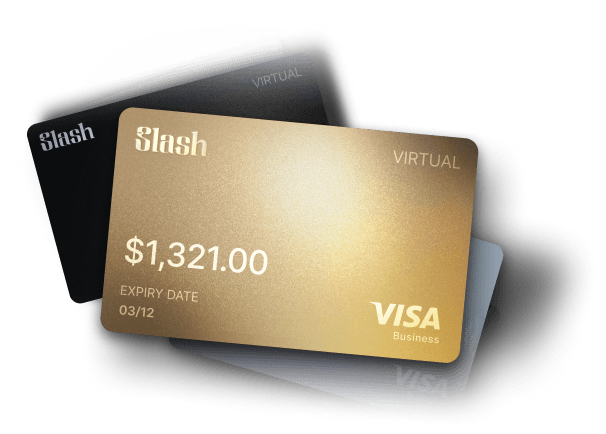
This guide explains how startup-friendly business credit cards work, what their advantages and limitations are, how they compare to traditional business credit cards, and who qualifies for them. We’ll also look at the Slash Visa® Platinum Card, which is a charge card designed to help startups access spending power while maintaining visibility and control over their finances.¹ Not only does the Slash Card allow users to apply without a credit check, but it offers up to 2% cash back on eligible business expenses.
What Are No-Credit-Check Business Cards?
“No-credit-check" business cards are cards designed to approve startups with little or no business credit history. These cards rely on alternative underwriting models rather than traditional credit scores or long credit histories.
Traditional business credit cards evaluate applications primarily through credit bureaus, requiring strong FICO scores, established business credit profiles, and multiple years of operating history. This can be frustrating for founders launching new ventures, as it ends up being easier to build credit when you already have credit.
No-credit-check cards break this cycle by evaluating different factors, such as monthly revenue and bank account balances. Rather than denying applications based solely on lack of credit history, these issuers assess the actual financial health and potential of early-stage businesses. This gives first-time founders and small business owners the launching point they need to get their companies up and running without having to spend time establishing credit.
How Do No-Credit-Check Business Cards Work?
Business credit cards use alternative underwriting methods to assess a startup’s health rather than standard credit scores. To make sure your business is healthy, they can evaluate different aspects of your operations, including:
- Revenue and cash flow: Bank account connections provide quick visibility into business income and expenses. Consistent deposits, healthy balances, and positive cash flow are great signs for providers.
- Bank balance and transaction patterns: Issuers analyze transaction patterns over 30-90 days, looking for stability, growth trends, and smart financial management.
- Founder credentials: Providers are more likely to trust someone with extensive industry experience and/or who has successfully launched startups. It might seem contradictory for someone with years of business experience to seek a no-credit-check card, but there are times when veteran entrepreneurs seek a fresh start after an event harms their credit score.
- Business model/industry type: Some lenders evaluate the business model itself. Industries with predictable revenue flows, such as SaaS companies that earn money through subscriptions, can be preferable in the eyes of an issuer.
There are a couple of precautions credit card companies can take before issuing cards to individuals with a weak credit history. They may issue a secured credit card, which requires the user to deposit a refundable security deposit. If someone with a secured credit card can’t make their monthly payment, their initial deposit acts as collateral, protecting the issuer. An unsecured credit card doesn’t require a security deposit.
Many business credit cards also come with personal guarantees, which are legal agreements that hold the founder personally liable if their company can't pay. While the card is in the business's name, the personal guarantee puts the founder themselves on the hook for any debt.
Typical Limits and Terms
Initial credit limits for no-credit-check cards come in a wide range, sometimes as low as $500 to start. Limits often begin conservatively, increasing as you demonstrate responsible usage. Some issuers review limits quarterly, while others require formal requests for increases. Either way, a secured credit card will offer a credit limit that matches your security deposit.
Interest rates tend to be higher than traditional business cards, so you can expect 18-25% APR compared to 15-18% for conventional options. This reflects the higher risk issuers take on businesses without established credit.
Things to Consider When Applying for No-Credit-Check Business Credit Cards
Understanding the nuances of no-credit-check cards can help you make the right decisions about what’s best for you and your small business. Here are some more elements we haven’t discussed:
Check for Eligibility
Some issuers restrict business credit card eligibility by business structure, industry, or geographic location. The first thing you’ll want to do is review a business card’s eligibility criteria before investing time in applications.
Full Repayment Required
Many startup-friendly business cards require full repayments each month. While this structure can feel limiting to those with uneven cash flows, it does help prevent debt accumulation. If you see yourself carrying long-term balances as you do business, you may be a better fit for a card with revolving credit.
Rewards and Benefits
Many no-credit-check cards offer rewards such as competitive cash back or points programs, though the structures vary significantly. Some offer flat-rate cash back that converts to statement credits, while others offer category bonuses. The Slash Visa® Platinum Card offers up to 2% cash back on eligible business expenses, helping startups with thin margins access a little extra capital.
Credit Building Not Guaranteed
Small business owners with nonexistent credit will likely want to use their new card to build up their business credit score. However, not all startup business cards report to major credit bureaus, which means you won’t get a head start on building credit as you use it.
Links to Your Bank Account
Alternative underwriting requires issuers to have a connection to your business bank account for transaction analysis and visibility into cash flow patterns. If you're still using personal accounts for business transactions, you’ll need to open a dedicated business account before acquiring a business credit card.
Fees May Apply
Credit card companies often charge fees on these cards to offset the higher risk they assume. Annual fees, monthly maintenance fees, and higher transaction fees can all appear on startup business credit cards. Slash Card fees are plan-specific, and may include a 2% fee for transactions made in a currency other than U.S. dollars, and a 1% (min. $0.40) for transactions made or processed outside the United States.
Good for Recurring Expenses
No-credit-check cards excel at managing predictable business expenses such as software subscriptions, advertising spend, inventory purchases, and vendor payments. Given their monthly payment requirement, they're less suitable for large one-time purchases or expenses that come with extended payment terms.
Credit Limits Can Change
Unlike fixed-limit traditional cards, many startup cards adjust limits based on ongoing business performance. Strong revenue growth may trigger automatic limit increases, while declining transaction volumes could result in decreases.
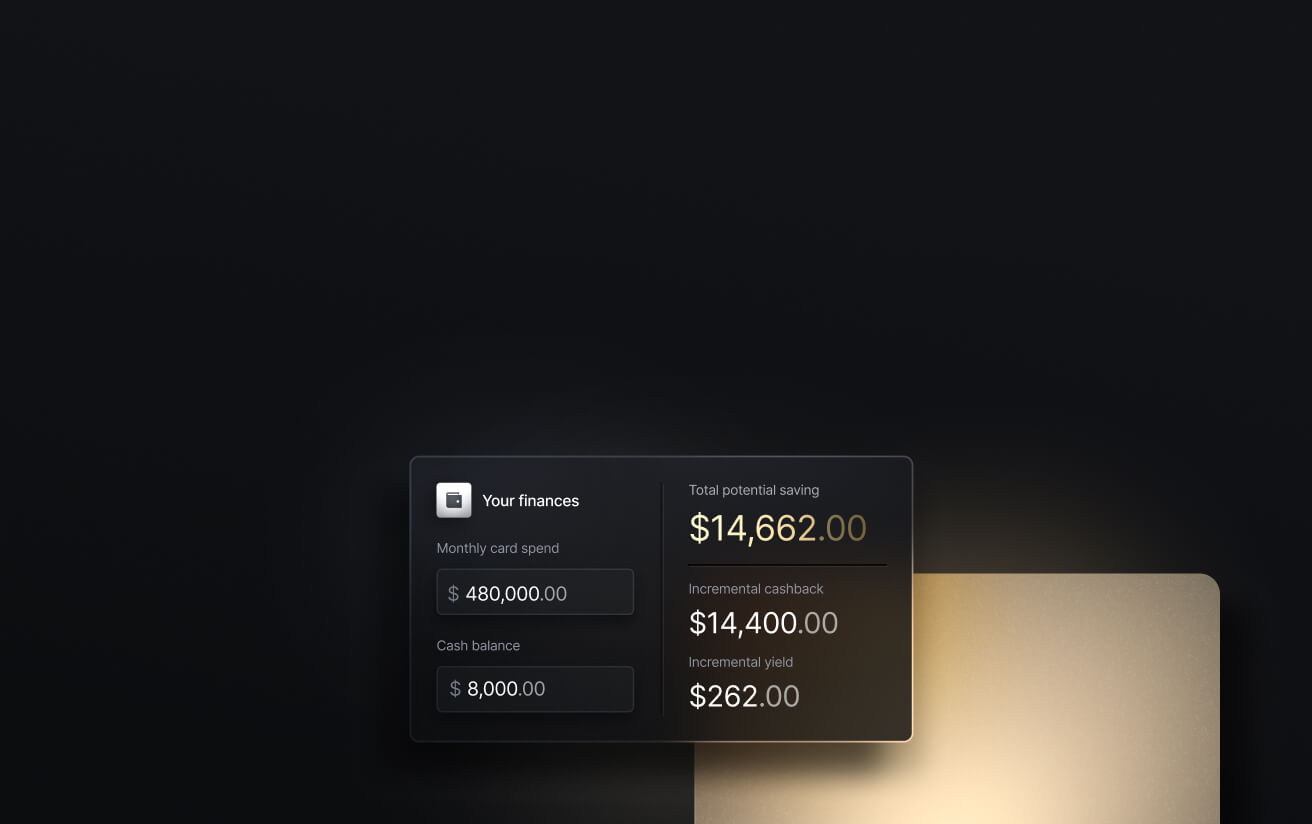
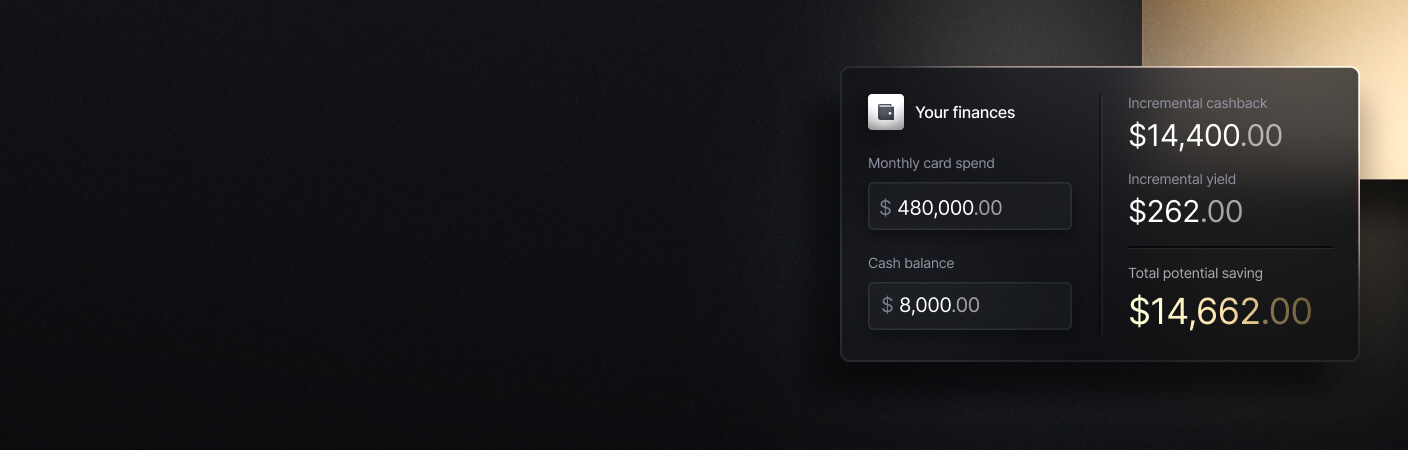
See the ROI behind your spend
Use this calculator to understand impact, then manage and track it all in Slash.
What are the Top 5 Business Cards For Startups?
Let’s take a look at some of the most popular business cards that don’t require a lengthy credit history. Some of the following are a good match for established startups, while others are meant for founders looking to get off their feet. We ranked these based on perks, eligibility requirements, and how useful they can be for startups. The top five are:
#1. Slash Visa® Platinum Card
The Slash Visa® Platinum Card is a corporate charge card that only requires your Employer Identification Number (EIN) for approval and comes with no personal guarantee. Instead of putting your business through a traditional credit check, the Slash Card bases your spending power on your actual financial performance. As a result, there’s no preset limit or low ceiling to cap your spending. As a charge card, balances must be paid in full at the end of each business day.
This card offers a bonus of up to 2% cash back on eligible business expenses, unlocking extra capital that can allow your business to move more nimbly. With the help of unlimited virtual cards, each employee can make purchases that earn cash back, no matter where they are. With an all-in-one dashboard that includes automated expense management, granular spend controls, and an agentic AI assistant named Twin, the Slash business banking platform can be a great starting point for managing early-stage expenses. If you haven’t heard, the Slash Card also comes in metal.
- Strength: You get the features of a deep financial platform alongside a charge card that doesn’t pull your credit or require a personal guarantee. It also doesn’t charge an annual fee.
- Weakness: Slash isn’t available to sole proprietors.
- Best for: Startups looking for a business banking platform and a high cash back charge card at the same time.
#2: Ramp
The Ramp corporate card doesn’t run a personal credit check or require a personal guarantee, but it does require users to hold at least $25,000 in a business bank account. If you meet that minimum, you get a charge card with a 30 day payback cycle, no annual fee, and per-merchant, category, and time-bound spend controls. One of Ramp’s more unique features is its corporate travel booking with built-in policy enforcements, which can help manage team spend while on work trips.
- Strength: Like Slash, Ramp includes a finance platform with features like receipt capture and accounting integrations.
- Weakness: You’ll need $25,000+ in a business bank account, and the card is only available to LLCs, corporations, and limited partnerships, which excludes sole proprietors and unregistered businesses.
- Best for: Well-funded startups that plan on traveling as their business grows.
#3: Mercury IO
Startups that bank with Mercury get access to their charge card, known as Mercury IO. They don’t check your credit, nor do they require a minimum account balance. In your first few months with the card, your balance will need to be repaid daily, but you may be able to access 30-day repayment terms once you maintain a $15,000 account balance. Spending with the Mercury IO card earns an unlimited 1.5% cash back on all purchases.
- Strength: There’s no minimum account balance, and you can earn a solid rate of cash back without having to worry about categories or eligibility.
- Weakness: Spending outside the US isn’t a great idea with the Mercury IO card, since it comes with a 3% foreign transaction fee.
- Best for: Startups interested in simple, reliable cash back that aren’t planning on doing much business across borders.
#4: Brex Corporate Card
The Brex Corporate Card offers expense management tools, vendor discounts, and spend controls with no personal guarantee or business credit score check. They offer solid cash back, but it’s a little complex; you get 7x points on rideshare, 4x on travel, 3x on restaurants, and only 1-2x on everything else.
There is one hurdle to get over before applying to the Brex card, though – startups need to have at least $50,000 in a business bank account to earn access to the card. The Brex Corporate Card is a solid option for businesses with healthy funding, but it may not be accessible to founders who are trying to get off the ground.
- Strength: Helpful expense management features plus partner discounts with companies like QuickBooks, OpenAI, AWS, and more.
- Weakness: A $50,000 minimum balance is a tall order for a lot of startups, and is the highest floor in its class.
- Best for: Venture-backed startups with a lot of money on hand that work with some of the vendors Brex partners with.
#5: OpenSky Secured Visa Credit Card
As indicated in the name, OpenSky offers a secured card with limits that match the security deposit you initially put down (min $200, max $3,000). This card is especially designed for individuals who want to build their business credit score, as activity is reported to major credit bureaus. After 12 months, the card can become unsecured and the cardholder's credit score will often be in a better position. The main caveat with the OpenSky Secured Card is that it isn’t exclusively designed for businesses, and doesn’t come with banking and expense management tools. Ultimately, it’s a fit for sole proprietors and founders who are looking to build personal credit.
- Strength: No-credit-check approval with a deposit as low as $300, and the ability to build personal credit over time.
- Weakness: It’s not exactly a business card. Your limit equals your deposit, there’s a $35 annual fee, and it doesn’t build your company's credit file.
- Best for: Sole proprietors and founders rebuilding their personal credit so they can qualify for a more robust business card later on.
Eligibility Strategies for Business Credit Card Approval
Here are some ways to increase your odds of approval when you apply for a business credit card without established credit:
Use the Right Financial Foundation
Establish a dedicated business bank account at least a few months before applying for cards that require bank account linking. It’s wise to maintain consistent business-related activity and healthy balances relative to your spending needs. For cash-based underwriting, issuers like to see far more than your requested credit limit in your average account balance.
Choose Issuers with Startup-Friendly Underwriting
Not all card programs serve early-stage businesses equally. Some explicitly target startups, while others focus on established companies. Cards issued by fintechs and alternative lenders tend to offer more flexible underwriting than traditional banks. The best cards for startups offer quick, credit-check-free approval and flexible underwriting models.
Strengthen Your Application with Documentation
It’s smart to prepare comprehensive documentation, such as articles of incorporation, business plans, revenue projections, bank statements, and proof of vendor relationships. With alternative underwriting, any information that strengthens your case is good information.
Build Business Credit Proactively
Whether you’re pursuing no-credit-check cards or cards that report to credit bureaus, it’s best to start building your business credit score early. Even if you acquire a business credit card that doesn’t actively help your credit, a long history of responsible spending will help your score down the road.
Work with Issuers Open to New Businesses
Traditional banks move slowly and apply rigid underwriting criteria. Modern finance companies, on the other hand, pioneered alternative underwriting specifically for startups. These issuers often approve applications within hours rather than weeks, connect directly to bank accounts for real-time assessment, and provide virtual cards for immediate use.
Example Timeline and Checklist
- Month 1: Open a dedicated business bank account, obtain EIN if you don't have one, prepare business plan
- Month 2-3: Build consistent transaction history in business account, maintain healthy balances, separate all personal transactions from business expenses
- Month 3: Research issuer options matching your business stage and needs, prepare documentation, connect bank account for pre-qualification where available
- Month 4: Submit applications to 2-3 issuers simultaneously (within 14-day window to minimize credit impact), compare approved offers, select the best option for your needs
- Months 5-12: Use card responsibly with full monthly payments, request limit increases quarterly, monitor business credit reports
How the Slash Card Can Help Early-Stage Founders Without Credit
By focusing on cash flow visibility, responsible spending, and clear financial separation from day one, founders can use no-credit-check cards as a stepping stone toward stronger financial foundations. The Slash Visa® Platinum Card can be that first step for founders without a strong credit history.
Our card offers EIN-only approval and accounting integrations to support early-stage spend management, providing the financial infrastructure small businesses need without the barriers traditional banks impose. High cashback rates and expense management tools provide extra help when your capital and time are equally limited. As your business scales, high credit limits and unlimited virtual cards ensure operations aren’t capped by a card with startup-level capabilities.
Each card, physical or virtual, is accessible on the dashboard of our business banking platform. This platform comes with a full suite of financial tools, including:
- Accounting & ERP integrations: Sync transaction data with QuickBooks Online, Xero, NetSuite, or Sage Intacct to streamline reconciliation, reporting, and month-end close.
- Native cryptocurrency support: Send and receive USD-pegged stablecoins USDC and USDT across eight supported blockchains for faster, lower-cost global payments.⁴
- Diverse payment rails: Slash supports a wide range of payment methods, including card spend, global ACH, international wire transfers to over 180 countries via SWIFT, and real-time domestic payments through RTP and FedNow.
- Global USD: The Slash Global USD account is designed as an alternative for foreign founders who want access to USD without forming a US entity.³ Balances are backed by Slash’s USDSL stablecoin, which is designed to maintain a one-to-one value with the US dollar.
- AI-powered finance: Twin, Slash's built-in AI assistant, can run complex financial analysis from a prompt or handle tasks like issuing cards in bulk and flagging actions that need your attention. It operates inside the permissions and approval rules your team already set.
If you’re a small business owner with little to no credit history, the Slash Visa® Platinum Card can give you the tools you need to manage your finances and take your startup to the next level.
Apply in less than 10 minutes today
Join the 10,000+ businesses already using Slash.
Frequently Asked Questions
What affects the size of my credit limit?
Your credit limit is determined by a combination of your business's health and your personal credit (or lack thereof). Similar to alternative underwriting methods, some specific factors include annual revenue, cash flow, and business model. Building business credit can sometimes increase your credit limit as well.
What credit bureaus do credit card companies report to?
The three major business credit bureaus are Equifax, Experian, and TransUnion. It's important to note that these credit bureaus themselves aren't the ones that make lending decisions, but issuers use data in credit reports from those bureaus to make lending decisions.
How to Get a DUNS Number: What It Is, and What You’ll Need to Apply

Can a balance transfer affect my business credit score?
While a balance transfer can cause a slight dip in your credit score, utilizing several credit cards wisely can ultimately be healthy for your score, as it’s a sign of responsible spending.


