

How to Manage Employee Expenses Using Prepaid Business Cards
Imagine this: your small business is a hit, your team starts growing quickly, and you realize you need a smarter way to manage company spending. The problem is that your business may be too new to qualify for a traditional business credit card, and some premium options might have annual fees outside your price range anyway. While some entrepreneurs in this situation may rely on debit cards and checking accounts, others want the advanced expense management tools, reporting capabilities, and flexible spending that come with a business card.
If you’re looking for a type of card that comes with these perks, most prepaid options can provide similar controls without the need to open new credit lines. While prepaid business cards can be overlooked by business owners shopping for credit cards, they offer more versatility than cash, checks, and even some debit cards.
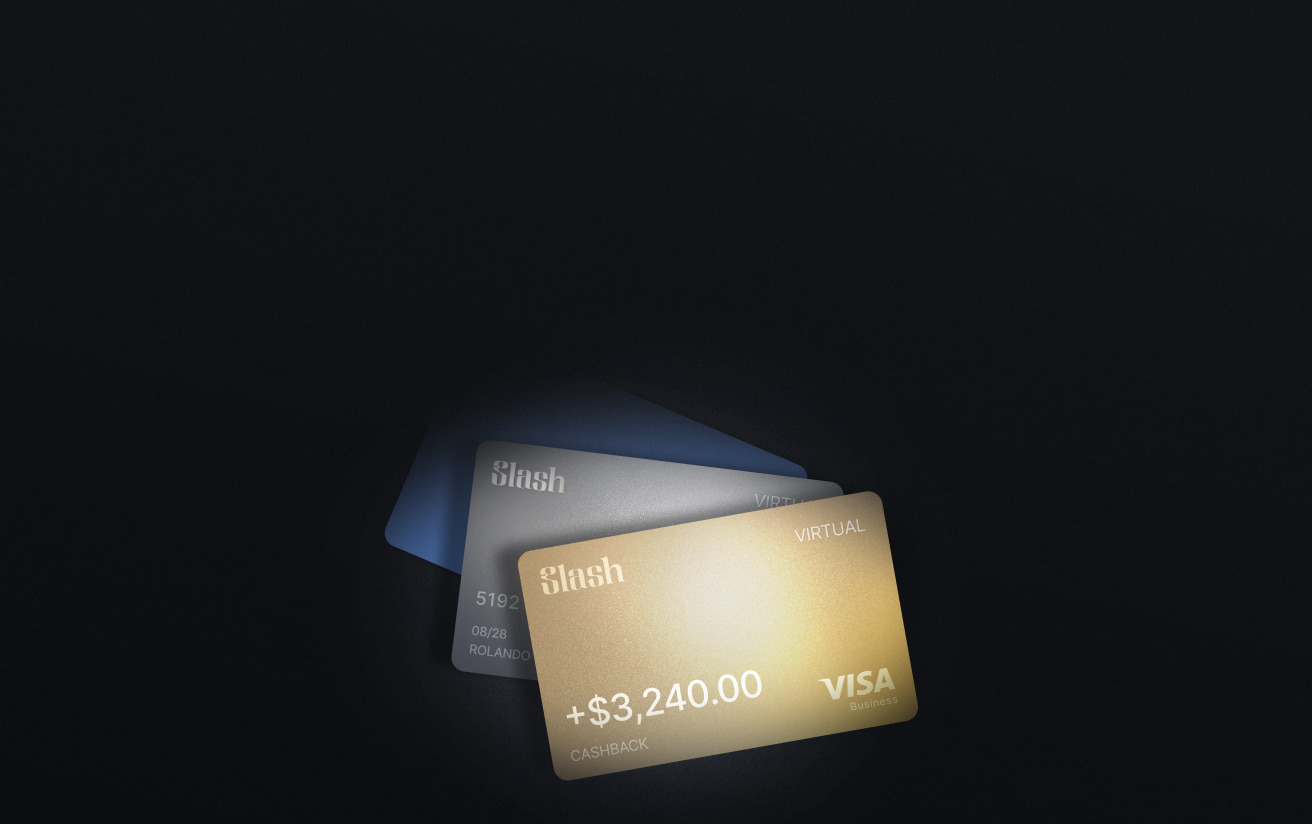
When it comes to allowing control over employee spending, prepaid cards have earned a spot in the conversation alongside corporate credit cards and charge cards. The question is: what makes them all different? In this article, we’ll discuss how prepaid business cards work, their pros and cons, how they compare to other types of cards, and leading prepaid cards in 2026. We’ll also look at the Slash Visa® Platinum Card, a corporate charge card that serves as an alternative to prepaid cards.¹ The Slash Card offers up to 2% cash back and configurable spend controls on a financial dashboard designed to help your business grow.
The standard in finance
Slash goes above with better controls, better rewards, and better support for your business.

What is a Prepaid Business Card?
A prepaid business card is a type of payment card that draws from preloaded funds by an account administrator. These cards don’t extend a revolving line of credit; instead, they come with a preloaded budget that employees can use on approved expenses. There aren’t any personal guarantees or credit checks, nor can cardholders accrue debt. Any time a prepaid card runs out of money, its balance can be replenished by a company's revolving balance or linked business account.
As an example, let’s say an employee has been given a prepaid business card to spend on office supplies with a $400 budget. Once they reach that $400 threshold, it acts as a wall that prevents them from spending any more. At that point, the business can decide whether or not to add more funds.
While prepaid business cards have traditionally been seen as one of the simpler expense management tools on the market, many card issuers have expanded their capabilities to include features that were once reserved for business credit cards and corporate charge cards. New prepaid business cards often feature the built-in expense management tools and integrated data dashboards that you sometimes see in more robust corporate card programs.
Uses and Benefits of Prepaid Business Cards
Prepaid business cards most commonly serve new startups that don’t yet qualify for a traditional business credit card. That said, prepaid cards can provide benefits to any business, from a fresh startup to a global enterprise. Let’s take a more detailed look at the uses, benefits, and functions of prepaid cards:
Low business credit risk
Prepaid cards can serve high-risk or early-stage businesses that don't yet qualify for traditional business credit cards. They don’t require a business credit score to apply, nor do they report to credit bureaus. Instead of a credit limit, spending is limited by the prepaid card's available balance. These characteristics can be valuable for owners trying to minimize misuse or exposure to business credit risks.
Expense management tools
Depending on who you bank with, your business may not have access to automated expense management tools, virtual cards, or real-time spend analytics. Many modern prepaid business cards come with features like spend analytics, category customization, and accounting integrations that you’d expect to find in more advanced expense management software.
Per diem expense controls
A “per diem” is a fixed daily allowance given to employees to cover travel expenses like meals, lodging, and incidentals. The U.S. General Services Administration (GSA) provides different maximum per diem amounts for different cities to mirror their cost of living. Prepaid cards are especially useful for managing per diems, as admins can set ceilings that match these maximum amounts.
ATM functionality
Most prepaid cards can be used at ATMs, since the funds loaded onto the card are tied to a business checking account. However, if your prepaid card issuer doesn't operate within a specific ATM network, you could be subject to withdrawal fees. Before signing on with a prepaid card, it’s helpful to find out what ATM network they partner with to make sure you have access to some in your area.
Building a financial history
While prepaid business cards don't contribute to your business credit history, they can be used to build a deep record of your financial history through previous statements and automated expense tracking. These documents can be especially useful when applying for a business credit card that doesn’t require a traditional creditcheck, such as the Slash Visa® Platinum Card.
How do Prepaid Business Cards Work?
From the employee’s point of view, a prepaid business card works just like other types of payment cards. Behind the scenes, expenses are handled a bit differently. Here’s a simplified overview of the payment process:
- Purchase initiation: The cardholder presents the prepaid business card at a point of sale, either in person or online. The terminal sends the transaction details, such as the amount, merchant code, and card number, through the payment network for authorization.
- Compliance check: Before the payment is approved, the prepaid card issuer's system verifies the transaction by checking company spending rules set by the account administrator. If the purchase complies with limits and merchant restrictions, it’s given the green light. If not, it can automatically decline at the point of sale.
- Payment validation and fund transfer: The card issuer then checks if sufficient funds are available in the prepaid balance and places an authorization hold for the purchase amount. If that amount is identified, the funds move from the issuer's prepaid account to the merchant's acquiring bank via the payment network.
- Payment data capture and input: After the transaction is completed, the issuer automatically records details such as the vendor name, amount, date, and merchant category. If the card program integrates with an accounting solution like QuickBooks Online or NetSuite, this data can be synced with your books to save time on reconciliation at the end of the month.
Best Prepaid Business Card Options in 2026
Below is an overview of the best prepaid cards available to businesses today. Our picks were based on the prepaid cards' access to expense management tools, customizable payment controls and spend analytics. These business expense cards aim to balance usability, transparency, and controls for growing teams:
PEX Prepaid Expense Visa®
The PEX Prepaid Expense Visa® card comes with solid spend controls, automated approvals, and a mobile app that allows employees to upload receipts. While it has a free tier that offers 5 free cards, it can cost from $75-$200 a month for companies looking for 20 or more cards. Interestingly, these monthly fees are roughly cut in half for non-profits. Overall, PEX’s features are adequate for expense management needs, though the price can add up if you’re looking to issue lots of cards.
- Strength: Mobile app and spending controls
- Drawback: Can be pricey for larger teams, and you can’t use the card to withdraw cash. Also charges a 3% foreign transaction fee, which is higher than most options.
Pleo Prepaid Business Card
Pleo is a Europe-based card provider that also extends its reach to the United States. The Pleo Prepaid Business Card offers configurable spending rules, analytics, and receipt management. While it offers more advanced tools and HRIS integrations on higher tiers, they can get expensive. Their £9.5 per month tier only allows basic expense tracking tools, 3 users, and an account balance of £5,000. If you’re looking to unlock their deepest features and add users for free, you could pay up to £249 a month.
- Strength: Impressive features on higher payment tiers, including AI-powered expense review and multi-entity management
- Drawback: Expensive payment tiers, with the bottom tier being unserviceable for teams of more than 3-4.
Dash™ Prepaid Mastercard®
The Dash™ Prepaid Mastercard® offers tools like spend category customization, auto-reloading, and export options for accounting software. Unlike some competitors, Dash doesn’t charge monthly software or per-card fees. Account balances are capped at $100,000 for Commercial Prepaid Cards and $15,000 for Standard Prepaid Cards. Like the PEX Card, the Dash™ Card also comes with a mobile app that allows users to upload receipts.
- Strength: No monthly subscription fee and decent tools for small teams
- Drawback: Hidden fees, such as $35 per fulfilled company card and $10.99 per paper statement (which are automatically mailed unless you opt out)
U.S. Bank Focus Prepaid Pay Card for Business
The U.S. Bank Focus Card is a prepaid business debit card mainly designed to help businesses manage their employee payroll disbursements. It has no annual fees and allows administrators to distribute and manage funds with a companion app. However, unlike some competitors, the business card does not automate expense reporting or provide insights into spending.
- Strength: Comes with an administrative site that helps manage payroll disbursements
- Drawback: Not too value for teams that aren’t looking for payroll features, as the card lacks deep expense reporting tools.
Best alternative: The Slash Visa® Platinum Card
Unlike a prepaid card, the Slash Visa® Platinum Card is a charge card that must be paid off in full at the end of each day. The Slash Card offers the same accessibility and spend management convenience you'd expect from a prepaid card, along with a lot more benefits connected to its all-in-one business banking platform.
Slash offers physical and virtual cards with automated compliance workflows, real-time payment insights, integrations with accounting solutions, and powerful spend controls. The Slash Card also earns up to 2% cash back on eligible business purchases, which is a perk prepaid business cards rarely offer. Slash's streamlined application doesn't require a business credit check, making it a great option for new and growing businesses seeking alternatives to traditional credit cards.
Pros and Cons of Using Prepaid Business Cards
While prepaid business cards can work for developing businesses, they aren’t always a one-size-fits-all solution for every stage of its lifecycle. Let’s look at a few benefits and downsides that come with prepaid cards:
Pros
- Managers and owners can get greater control over employee spending through preset limits and adjustable card balances.
- Because these cards aren't tied to a business credit score, misuse generally carries less long-term risk. Overspending might trigger an overdraft or declined transaction, but it won't affect your company's credit score.
- Many of today’s prepaid card programs include financial dashboards that offer spending insights and category tracking.
Cons
- Prepaid business cards do not build business credit. They can simplify expense management, but they won't help your company qualify for future credit lines, leases, or loans.
- Many prepaid cards have high annual costs or come with hidden fees, such as paper statement charges or per-card charges.
- Prepaid cards seldom come with the level of cash back rewards that credit cards and charge cards can offer.
- Since prepaid card issuers often operate with smaller capital reserves, some restrict cardholders to a low maximum account balance.
- Reloading funds can be inconvenient. If a card runs out of money when an employee needs it, any delays in replenishment can cause problems and lead to avoidable stress.
Alternatives to Prepaid Business Cards
Prepaid business cards can often compete admirably with other types of cards, but they aren’t necessarily the right long-term solution. Here are a few other corporate card structures you may want to consider:
Business charge cards
Charge cards extend a temporary line of credit that must be paid in full at the end of each period, whether that period is a day or a month. From a business owner’s point of view, the consistent payment schedule of a charge card can actually be a benefit, as they won’t have to worry about accruing heavy interest or keeping track of owed payments from different periods. The simplicity of one-time, complete payments can also help streamline month-end close. Consequences for missed payments can include late fees and damage to your credit score.
Business credit cards
Traditional corporate credit cards help build business credit, offer rewards such as unlimited cash back and travel perks, and provide access to a revolving line of credit that allows balances to carry over month to month. However, they can be difficult to obtain for newer businesses without an established credit history. Their rewards structures can also be overly complex, especially in the case of points-based programs that restrict your redemption avenues.
Business debit cards
Business debit cards draw funds directly from a company's checking account at the time of purchase. Like prepaid cards, the best business debit cards can offer features such as spending controls and the ability to issue multiple employee cards. The key difference is that debit cards don't require users to preload funds ahead of time. Purchases are made directly from the account balance, providing more immediate access to available cash. With that access comes the potential for fraud, though, so security features are particularly important with business debit cards.
Why Consider Slash Over a Prepaid Business Card
If you’re looking for a prepaid business card, that may be a sign you don’t have the business history or credit score to access a traditional corporate credit card. That doesn’t mean you have to settle for less, however. The Slash Visa® Platinum Card allows business owners to manage and control employee spending without difficult qualification requirements.
Our streamlined application process requires only a government-issued ID, recent bank statements, basic business details, and proof of operating activity. There's no personal guarantee, no Social Security Number, and no credit check required. Instead, we evaluate your business's real financial profile, focusing on performance and cash flow rather than past credit history.
Prepaid card programs can be useful for keeping spending in check, but they often stop there. Slash goes a step further, helping you scale your business with smarter, more flexible financial tools. Each card you issue can come with vendor, category, and budget controls that can be adjusted on a per-card basis. All purchases made with the Slash Card are reflected in real time on our integrated financial dashboard, giving business owners a clearer view of their company’s spending.
In addition to our card and expense management features, Slash users get:
- Native cryptocurrency support: Send and receive USD-pegged stablecoins USDC and USDT across eight supported blockchains for faster, lower-cost global payments.⁴
- Diverse payment methods: Slash supports a wide range of payments, including card spend, global ACH, international wire transfers to over 180 countries via SWIFT, and real-time domestic payments through RTP and FedNow.
- Multi-entity support: Slash offers multi-entity account management tools without separate logins, allowing businesses to track spending, manage accounts, and download statements across all subsidiaries in one place.
- Business banking: FDIC-insured business checking, protected up to $150M through Column N.A.'s insured cash sweep network.²
- AI-powered finance: Our platform comes with Twin, a built-in AI agent that can be prompted with natural language to complete complex tasks. Users can ask it to create cards, pay invoices, review your cash flow, and much more.
Don't settle for a card with limitations. Start building your financial future with Slash.
Apply in less than 10 minutes today
Join the 10,000+ businesses already using Slash.
Frequently Asked Questions
What’s the difference between a prepaid business card and a corporate charge card?
Prepaid business cards draw from funds you load onto the card in advance, similar to a debit card. Corporate charge cards, like the Slash Visa® Platinum Card, extend short-term credit that must be repaid in full each billing cycle. Charge cards typically offer more features like cash back rewards and higher spending flexibility, while prepaid cards are limited to the preloaded balance.
Top Business Charge Cards in 2026: Compare Options

Do prepaid business cards help build business credit?
No, prepaid business cards do not help build business credit because they are not tied to a credit account. Since cardholders spend preloaded funds rather than borrowing, the activity is not reported to business credit bureaus.
Can I get a business card without a credit check?
Yes, prepaid business cards typically won’t require a credit check, since you’re using preloaded funds. Some corporate charge cards, like Slash, also offer streamlined applications that evaluate your business based on cash flow and financial performance rather than traditional credit scores, making them accessible to startups and newer businesses.
Business Credit Cards With No Personal Guarantee: Top Picks and How To Apply

What are the main drawbacks of prepaid business cards?
Prepaid business cards don’t build business credit, often have lower maximum account balances, may charge high monthly fees, usually come without cash back rewards, and require users to manually reload funds.


