

What Are the Best Mercury Alternatives in 2026?
If you have a business bank account, you know how important it is to your financial operations. It holds your funds, helps manage your cash flow, and serves as the platform where you record and manage your financial health. With so many digital banking solutions available today, deciding where to place your company’s money can feel overwhelming.
With nine years active in the fintech space, Mercury is actually one of the older and more experienced business banking platforms on the market. However, new competitors have prompted both curious business owners and long-time customers to look for alternatives. Whether you’re seeking crypto support, vertical-specific tools, or industry-leading cash back on corporate cards, other platforms may be a better choice.
In this guide, we explain what Mercury does well, what it doesn’t, and what today’s top Mercury alternatives are. Along the way, we’ll highlight how Slash’s business banking platform supports modern expense management.¹ Unlike Mercury, Slash offers broad global access and expanded financial tools, including account availability for businesses without a U.S. LLC and native cryptocurrency support for faster, lower-cost international transfers.³, ⁴
What is Mercury Bank?
The first thing to note is that Mercury is a financial technology company rather than a bank, even though it’s often referred to as such. Banking services run through partner institutions, currently Choice Financial Group and Column N.A., after Mercury began transitioning away from Evolve Bank & Trust in early 2025. That may change before long, since Mercury received conditional approval from the OCC in April 2026 to establish Mercury Bank, N.A. That said, the company is still in the organization phase and awaiting final approvals.
Mercury offers free business checking and savings with no minimum balance, and deposits are covered by FDIC insurance up to $5 million through the partner banks' sweep networks. Their features include bill pay with automated invoice capture, invoicing, corporate and virtual cards with spend controls, and two-way sync with accounting software like QuickBooks and Xero. Mercury Treasury offers yield on idle cash for companies holding at least $250,000 across their accounts, and the IO charge card pays 1.5% cashback with no annual fee, no personal guarantee, and a limit tied to your Mercury balance rather than your credit history.
They offer a free tier that includes core features like banking and company cards, while “Plus”, the next tier up, includes recurring invoices and API access for $29.90/mo. For $299/mo, you get NetSuite categorizations and a relationship manager.
Why Consider a Mercury Bank Alternative?
There are far more digital banking options available today than when Mercury launched in 2017, and many newer platforms now offer capabilities that Mercury lacks. Here are some additional reasons your business may want to explore alternative business banking platforms:
Country restrictions and global payment constraints
Mercury maintains a broad list of restricted countries where its business banking services are limited or unavailable. Founders across much of Africa, as well as in southeast Asia, Pakistan, and Belarus cannot open a Mercury account. Mercury also charges a 3% foreign transaction fee, compared to Slash’s 2% fee. While both platforms support international SWIFT transfers, Slash's native cryptocurrency support gives users access to faster, lower-cost global payments. Overall, Slash is better suited for cross-border operations.
Inability to hold or transact cryptocurrency
Mercury doesn’t support crypto or stablecoins, meaning users are limited to holding and sending traditional fiat currencies. This can be restrictive for businesses that want to send money overseas without being hit by delays and fees. Slash, on the other hand, allows companies to hold and pay with USD-pegged stablecoins including USDC and USDT. This flexibility extends to international businesses as well, with Slash’s Global USD account allowing USD payments without a U.S.-registered LLC.
Shortcomings within key features
Mercury comes with the corporate card program, treasury accounts, and sweep insurance you’d expect from an established fintech, but none of them are as strong as some teams might hope. The Mercury IO card only earns 1.5% cash back, whereas competitors like Slash offer up to 2% on their corporate cards. You can only access their treasury account if you have at least $250k to deposit, which shuts the door on most startups and small businesses. On the other side of the spectrum, its FDIC insurance only covers up to $5 million via sweep networks, which isn’t sufficient for most corporations. Slash’s Treasury account, on the other hand, insures up to $150 million through Column N.A.’s sweep network.²
Who Are the Best Competitors to Mercury?
Below are some of our top picks for Mercury alternatives in 2026, along with breakdowns of the benefits and potential drawbacks of each platform:
#1: Slash
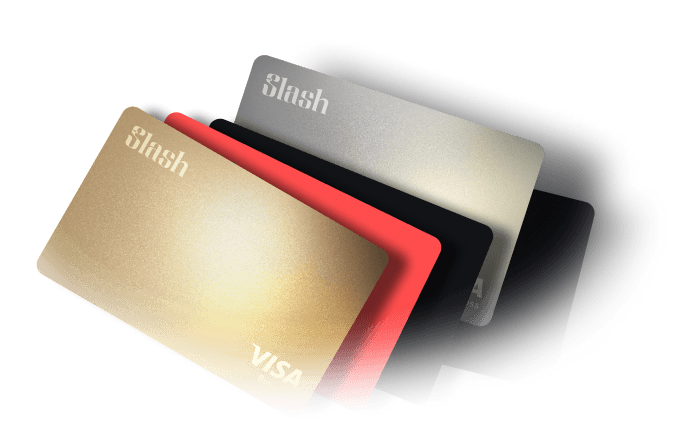
Slash is a business banking platform built to give companies greater control, flexibility, and visibility over their finances. Its customizable workflows adapt to a range of industries—from healthcare and e-commerce to marketing and beyond. With real-time insights and detailed analytics, Slash enables teams to make data-driven decisions that support long-term growth.
Slash comes with a high-cash back corporate charge card, native cryptocurrency support, accounting automation tools, working capital lines of credit, and a lot more.⁵ To help manage it all, you can ask Twin, Slash’s agentic AI assistant, for help. Twin can look through your financial history to help spot trends, build charts, and project your future cash flow. It can even execute tasks on your behalf, including making purchases and freezing employee cards.
- Strength: Few other banking providers allow users to track payments, invoices, working capital, treasury, and more on one live dashboard.⁶
- Weakness: The Slash Visa® Platinum Card is a charge card, meaning companies looking to extend their runway and use more capital won’t be allowed as much flexibility as they would with a credit card.
#2: Brex
Brex pairs a corporate charge card with expense management, bill pay, and a business account, all underwritten on your company's financials rather than anyone's personal credit. Applications run on an EIN alone, no personal guarantee is required, and cash held in Brex's Vault sweeps across program banks for FDIC coverage reaching $6 million. Card rewards climb to 7x on rideshare and 4x on travel booked through Brex, though you only earn 1x points on most other purchases.
- Strength: Good spend controls and rewards depth for teams, with credit limits set by revenue and cash rather than credit history.
- Weakness: With some referral-based exceptions, Brex doesn’t allow any company that makes less than $500k a year to open an account. If you’re a small business or new startup, you’re likely out of luck.
#3: Rho
Rho bundles business checking, savings, corporate cards, bill pay, invoicing, and treasury with no subscription fee at any tier. Its integration list is fairly strong for a platform of its size, covering QuickBooks, Xero, NetSuite, and Sage Intacct. The corporate card requires no personal guarantee and no personal credit check, and same-day ACH, domestic wires, and checks are all free.
- Strength: Free platform pricing with no per-user charges, paired with up to $75 million in FDIC coverage on savings through a sweep network.
- Weakness: Rho doesn’t support cryptocurrencies, which isn’t too surprising when compared to its peers. What’s more surprising is its lack of support for the RTP Network and FedNow, meaning companies have no easy way to send payments near-instantly.
#4: Novo
Novo is a mobile-first account built for freelancers, solo operators, and small teams that want simple banking tools. There are no monthly fees, no minimums, and no transaction limits, with banking services through Middlesex Federal Savings. Its Reserves feature splits your balance into as many as 20 buckets for taxes, payroll, or savings goals. It also connects to quite a few platforms outside of accounting, including Stripe, Shopify, Square, and dozens of other tools. The Novo Business Credit Card gives you 2% cash back if your account balance is over $5,000, but only 1% if your balance dips below that threshold.
- Strength: Novo is free to use, its fees are low, and it comes with a well-regarded mobile app that allows check deposits.
- Weakness: Its FDIC coverage stops at $250,000 through a single partner bank with no sweep network, which is a real constraint for any business holding meaningful cash. Novo's credit card also can't be applied for at signup, since eligibility is determined later based on account activity.
#5: Relay Financial
Relay is built around organizing money rather than moving it fast, giving small businesses up to 20 checking accounts on its lower tiers and 50 on the top plan. It also comes with a savings account, which isn't too common among neobanks. Banking runs through Thread Bank, with FDIC coverage reaching $3 million via sweep, and teams can issue up to 50 debit cards. With features like receipt capture and approval workflows, it’s also designed to help teams manage AP/AR and expense tracking.
- Strength: One of Relay’s key features is its savings account, with an APY that rises from 1.11% to 3.00% as you move up tiers.
- Weakness: Its cash back tops out at 1.5% and applies only to the Relay credit card rather than debit. Additionally, that 1.5% cash back and some other tools are locked behind a pricey $120/mo Scale plan. On the free plan, you only get 1% cash back.
#6. Bluevine
Bluevine focuses on earning yield on operating cash, with tiered checking plans running from a free Standard tier to Premier at $95 per month. Similar to Relay, you can earn 1.3% APY on the lowest tier and 3% APY on the highest tier -- but this is on checking balances rather than savings. Bluevine’s banking services come through Coastal Community Bank plus program banks, with FDIC coverage up to $3 million. Bluevine also offers a line of credit up to $250,000 issued by Celtic Bank, sub-accounts, invoicing with autopay, and positive pay on the top tier.
- Strength: High APY on a checking account is a rare feature, though it’ll cost you $95/mo to reach 3% APY.
- Weakness: Every rate carries conditions. The free tier's 1.3% requires either $500 in monthly debit spend or $2,500 in monthly deposits, and APY on the lower plans stops applying above $250,000. Additionally, to get a line of credit, you need to be a corporation or LLC, come with 12 months in business, and carry a 625 personal credit score (with a guarantee attached).
Choosing a Business Banking Alternative to Mercury: Key Criteria
Choosing the right Mercury alternative depends on a variety of factors, including your transaction volumes, team size, software requirements, and more. Ultimately, you need to ensure your company has the financial tools it needs to grow. Here are the features to look for when evaluating different banking providers:
- Full range of banking services: With an all-in-one platform, you don’t have to juggle different programs and you can keep your financial operations centralized. The more your banking software can do, the better.
- Integrations: Look for native functionality with widely used tools like QuickBooks Online and NetSuite. These integrations can help streamline accounting, reconciliation, invoicing, and account management. Platforms with configurable APIs unlock even more flexibility, allowing you to build custom workflows tailored to your business’s specific needs.
- Customer support reliability: When issues arise, whether it’s a delayed wire, a card decline, or an account freeze, you need a banking partner that can help. Prioritize platforms with reviews that indicate dependable support channels, clear escalation paths, and consistent response times. Slash offers 24/7 support from our team via our website.
- Security and regulatory compliance: Legitimate banking platforms should follow strict security standards, including requirements for KYC, AML, and PCI DSS (if applicable). Features like real-time spend insights, AI-powered monitoring, data encryption and tokenization, or multi-factor authentication can enhance security and keep sensitive financial information safe.
- Scalability and flexibility: Your banking platform should be able to support your business as it grows, not limit it. Look for solutions that can handle higher transaction volumes, support international payments in multiple currencies, and let you add new team members with role-based permissions. Scalable platforms like Slash also offer configurable spend controls, automated approval workflows, and multi-entity support for multiple subsidiaries and payment processors.
- Transparent pricing and fees: Hidden fees and unpredictable charges can hurt your margins. Seek providers with transparent pricing models, clearly defined transaction fees, and straightforward subscription structures.
Start Optimizing Your Business Banking With Slash
Mercury is certainly a capable banking platform, but it comes with several trade-offs. The service has limited global support, no access to blockchain-based payments, and high interest rates on credit products.
On the other hand, Slash is a business banking platform that comes with a full suite of financial tools and adapts to the way different industries actually operate. Whether you’re running a construction company, an e-commerce brand, or a healthcare organization, Slash’s customizable workflows can be tailored to your needs. The Slash Visa® Platinum Card comes with up to 2% cash back, and you can send money overseas in minutes through USDC and USDT.
Your business’s revenue, expenses, stablecoin transfers, our Treasury account, and more are gathered on one dashboard under one login. Here, you’ll also find Twin, our agentic AI assistant. With simple text-based prompts, Twin can help you break down your financial history and help you plan for the future based on that data.
Slash comes with quite a few more more features we haven’t touched upon yet, including:
- Global USD: The Slash Global USD account is designed as an alternative for foreign founders who want access to USD without forming a US entity.³ Balances are backed on Base by a balance held in USDC, which is designed to maintain a one-to-one value with the US dollar.
- Diverse payment rails: Slash supports a wide range of payment methods, including card spend, global ACH transfers, international wires to over 180 countries via SWIFT, and real-time domestic payments through RTP and FedNow.
- The Action Center: A one-stop spot for employees to see pending tasks assigned to them. These may include card requests, expense submissions, reimbursement reviews, and more.
- Separate virtual accounts: Create multiple business bank accounts to silo cash flows by project, department, or client with real-time analytics across each of them.
- Multi-entity support: Slash offers multi-entity account management tools without separate logins, allowing businesses to track spending, manage accounts, and download statements across all subsidiaries in one place.
If you’re ready to choose your first business banking solution, or if you feel like making a switch from Mercury, reach out to Slash today.
Frequently Asked Questions
Can I switch from Mercury to another bank without closing my existing accounts immediately?
Yes. Most banking providers allow you to open a new business checking account without closing your existing one, and it’s often best to keep both accounts active temporarily to ensure a smooth transition. Start by opening your new account, then migrate key transactions, and update integrations and automations. Only close your Mercury business checking account once all payments and balances have fully transferred.
How to Switch Business Bank Accounts in 10 Easy Steps

Do any Mercury alternatives offer cryptocurrency-friendly banking services?
Mercury doesn’t support crypto-related banking services. While crypto and stablecoin functionality is still not widespread among most neobanks, Slash offers built-in stablecoin on- and off-ramps for USDC and USDT. This allows you to send and receive USD-pegged stablecoin payments directly within the Slash dashboard.
Are there options for virtual cards with cash back rewards similar to Mercury?
Yes. Several banking solutions offer virtual cards with cash back programs. However, few digital banks offer the reward structure of the Slash Visa® Platinum Card, which earns up to 2% cash back on eligible purchases. Slash’s platform also includes customizable spend controls, card groupings, and unlimited virtual card issuance.
Virtual Business Credit Cards: How They Work + Best Options for 2026

Read more from us


