

Finance Has Never Had More Software. The Busywork Didn't Go Anywhere.
Thirty years ago, no business really needed to think much about the systems behind their finances. They worked with their local bank branch, hired the accountant in town to look at their books every once in a while, and kept five filing cabinets in the office filled with invoices, bills, receipts, and statements.
It could be scattered and slow, but it worked.
Today, there’s an assortment of tools that each take some of the hassle out of managing money the old way:
- Banking apps for a quick look at account balances and card utilization;
- FX platforms that make it easier to move money across borders;
- Accounting, invoicing, and billing software that replace filing cabinets with an interface for handling PDFs in bulk.
The issue is that things have gotten too spread out. When your business runs a complicated mess of different software half-connected to each other, keeping all of it organized can be time consuming, error-prone, and needlessly frustrating.
But what if you could have a control center for your business's finances instead of one more tab in it? Rather than using a bank for deposits, a card issuer for spend, another service for treasury, a separate platform for cross-border payments, and a spreadsheet to reconcile all of it, Slash unifies the capabilities of each in one platform.¹, ⁶
The standard in finance
Slash goes above with better controls, better rewards, and better support for your business.

Every Tool You Add Is Another Thing to Reconcile
The weak point in a finance stack usually isn't any one tool. Failures happen when you start using one system in tandem with another.
A transaction isn't copied from the statement in your Chase app to your Xero account. A gain in your treasury dashboard needs to be reverse engineered in a spreadsheet before tax season. An invoice goes from your email inbox to your accounts payable system, which routes an approval to someone who pays it out of a third platform entirely.
Consolidation seems like one of the least impactful "features" of a financial system.
Bringing invoicing into the same software that your business uses for treasury is a big deal, but it can prompt a shrug when compared to a flashy card signup offer or an exclusive statement credit. It's a losing argument because it doesn't directly address the thing that most financial providers market their products on, which is helping people either save money or make more of it.
But something just as important can be saved with the right financial system: time.
A Stripe CFO report from June found that 63% of finance leaders use more than 10 different systems to manage their company's money. The system scatter is the problem: 45% of finance teams spend more than 10 hours every month just fixing data errors and discrepancies during reconciliation.
The software businesses adopted to make finance efficient mostly just changed what inefficiency looks like.
The time wasted during reconciliation doesn't even account for the mental gymnastics required to use over 10 different systems for work. Studies have looked at how context switching, which means moving from one application to another, affects productivity. Even though it can seem like a mindless switch to go from Google to a spreadsheet, those little switches take time and force a reorientation to continue working.
A 2022 study published in the Harvard Business Review tracked 137 people across three Fortune 500 companies and found workers toggled between applications roughly 1,200 times each day. Each switch costs a little over two seconds, which adds up to just under four hours a week spent reorienting, or about 9% of their time at work.
The more applications you can cut out of your stack, the more time you'll save from a lower amount of context switching.
There is also evidence that consolidation improves control quality. In a 2011 study published in the Journal of Information Systems, accounting researcher John Morris examined compliance filings from companies that had implemented enterprise resource planning systems between 1994 and 2003. He found that the ERP adopters were less likely to report internal control weaknesses than the control group that didn’t use them.
Less coordination between different software means less room for error. Plain and simple.
How Many Financial Tools Does a Business Need?
Very few businesses sat down and designed the way they manage money. They accumulated it, one tool at a time, each purchase solving the problem directly in front of them. What you end up with looks less like a system than a set of habits.
Deposits go to Chase, cards come from Amex, treasury sits with an asset manager, international payments run through Wise, stablecoins through Coinbase, bills through BILL, and whatever falls between all of them lands in a spreadsheet.
There's a better way to manage all of this. Slash puts all of that in one account. Let’s look at each platform in isolation to see how much of it Slash can handle.
Business banking: Chase
Chase Business Complete Banking is the default first account for a huge number of American businesses. The $15 monthly fee waives several ways, there's no minimum to open, card acceptance comes built in, and it sits behind the largest branch network in the country.
However, staying with Chase for your other accounts comes with some tradeoffs. Each additional account is another application. Savings yield has sat around 0.01%; their higher yield CD gets you near 2%, but it locks up your cash.
Another constraint is deposit insurance. FDIC covers $250,000 per depositor, per bank, and for a business every deposit under one entity shares that single limit (that means opening a second Chase account for a business doesn’t increase the coverage). Chase's own knowledge center tells business customers to spread funds across multiple insured banks, naming Insured Cash Sweep and CDARS as the services that handle it automatically. The bank is right, and it's also telling you to go somewhere else.
Slash accounts are eligible for FDIC insurance up to $150 million through partner bank Column N.A.'s insured cash sweep network, which spreads funds across a network of partner banks automatically to increase coverage.² You can also create as many virtual accounts as you want to segment funds by purpose, and treasury is included under the same login.
Corporate cards: Amex
American Express is the largest global commercial card issuer, with billed business up 10% to $428 billion in 2026. It is also a bank. American Express National Bank offers FDIC-insured business checking and savings alongside the cards, all in the same app.
Amex's own guidance states that business credit cards usually require a personal guarantee, meaning the owner is liable for the debt even if the business goes under. Most small business applications include a hard pull on personal credit. Amex's corporate program puts the liability on the company instead, but corporate programs are gated behind revenue and headcount thresholds most businesses never reach.
Virtual cards and deeper expense controls come through Emburse and SAP Concur, enterprise software Amex partners with rather than builds. The Amex app shows a statement-style list of transactions and a balance, with no view of that spend against the rest of the money moving through your business.
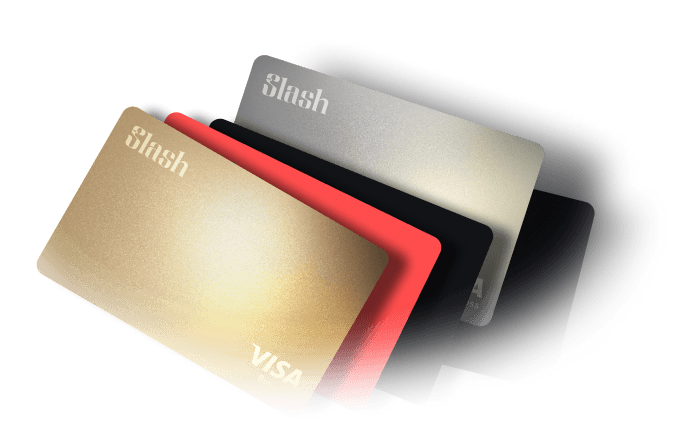
With the Slash Visa Platinum Card, you can issue unlimited virtual cards with spend limits and rules attached, Twin texts your employee for the receipt photo and matches it to the transaction, and transactions push to QuickBooks, Xero, NetSuite, Sage Intacct, or DualEntry. The card draws from the account you are already looking at, so the spend shows up alongside everything else. No personal guarantee or hard credit check required.
Treasury: Morgan Money
Morgan Money is J.P. Morgan Asset Management's short-term investment platform. It reported $313 billion in assets under management as of mid-2024, with access to short-term solutions from more than 35 fund providers, covering money market funds, repos, time deposits, CDs, commercial paper, and government securities.
It's also, by its own documentation, intended for institutional clients and qualified investors. Most companies reading this may not be eligible, so the comparison isn't Slash against J.P. Morgan's treasury desk. It's treasury access for your business versus none at all.
Rather than compete with the asset managers, Slash added them. You can open a treasury account backed by BlackRock or Morgan Stanley money market funds, with no minimum balance requirement to get started. Holdings are protected up to $500,000 by SIPC, which steps in to recover customer securities and cash held at a brokerage if that brokerage fails (separate from FDIC, which covers bank deposits). Because treasury sits under the same login as your operating balance, moving cash in or out doesn't involve a second application or a second statement.
Global payments: Wise
Wise is a platform for moving money between countries without paying a bank's markup on the exchange rate. You hold a balance in one currency, Wise converts it at the mid-market rate and charges a stated fee on top, then pays out in the destination currency.
Wise, structurally, is just a money transmitter. Balances are safeguarded but not FDIC-insured, there's no lending or check handling, its interest-bearing Assets product is unavailable to US businesses on regulatory grounds, and the company does not issue business cards.
For most businesses that means Wise works alongside a bank account rather than in place of one. It becomes a second balance you fund from your first, and someone has to decide how much belongs there before each payment run. Slash routes international ACH and SWIFT wires to more than 180 countries and 135 currencies out of your operating balance, so the money doesn't have to be moved somewhere else first.
Stablecoin rails: Coinbase
Stablecoins are becoming a major part of how businesses move money. Total dollar-backed stablecoin supply passed $320 billion by mid-April 2026, and first-quarter transaction volume reached roughly $28 trillion, up 51% from the prior quarter.
Coinbase Business launched in late 2025 as what the company calls a crypto operating account. You can send USDC to any on-chain address, and there are saved vendor contacts for repeat payments, invoicing, payment links, and transaction data syncing to QuickBooks and Xero through CoinTracker. Idle USDC earns rewards.
What it can't do is replace your business bank account. USDC balances aren't bank deposits, so they carry no FDIC insurance. You also don't get a US account and routing number of your own, which means no ACH, no wires, and no access to the instant payment rails RTP and FedNow. So, once again, Coinbase Business is yet another tool with its own data to reconcile against your bank statements.
Slash treats stablecoins as a native payment option alongside banking rails. Through a partnership with Bridge you can send and receive USD-pegged stablecoins including USDC and USDT across eight major blockchains, initiated from the same balance that runs payroll and pays your domestic vendors. Slash doesn't custody stablecoins, so your balance stays in dollars; then when you want to send a payment in USDT, your cash is converted on-chain automatically.
Accounts payable and receivable: BILL
BILL is accounts payable and receivable software. Vendor invoices arrive by email or upload, BILL reads the details off them, routes them for approval, and pays out of your connected bank account. It can also generate invoices to send your customers and track which ones have been paid.
Pricing starts around $49 per user per month, plus transaction fees for ACH, checks, cards, and wires. On the Essentials and Team plans every user is billed at full rate, approvers included, with discounted approver-only seats generally available only on Corporate and Enterprise. It’s a steep cost when you consider that several fintech platforms provide AP and AR tools for free.
Additionally, BILL doesn't pay your vendor from your account directly. On the process date it debits your bank for one lump sum covering every payment scheduled that day, holds the funds in an account it owns, and pays your vendors from there. Your statement shows a batch withdrawal rather than individual payments, which is why BILL has you keep a Money Out Clearing account in your books. Its documentation notes the transfer dates can differ by three to five days, which may keep that account from balancing to zero on a given day.
Slash Bill Pay is available for free to every user. The platform parses uploaded invoices, routes approvals, and tracks each bill through to paid. You can also create and send branded invoices with built-in payment links so customers settle by bank transfer or stablecoin. Payments are routed through the approvals in your Slash dashboard to the money held in your account, so there's no batch debit to untangle or clearing account to keep separate.
Slash: Everything You Need in One Place
Everything comes back to this: most finance platforms are good for their intended purpose, but rarely do they ever work in isolation. You’ll still need to connect your bank to 5 different tools, open accounts at other banks for yield, manage a crypto wallet on the side, and then reconcile all of that every month.
Or, you can use Slash:
- Business accounts
- Corporate cards
- Treasury
- Financing⁵
- Expense management
- Accounts payable
- Accounts receivable
- Accounting automation
- Multi-rail payments
- International payments
- Native cryptocurrency support
- Financial analysis
All in one place.
Using 10 different software providers to manage your money isn't a solution. It's just another version of the same problem. Click below to see what financial management looks like when there’s just one balance to check.
Apply in less than 10 minutes today
Join the 10,000+ businesses already using Slash.
Read more from us


