

Key Differences Between a Corporate Charge Card and a Credit Card, and How to Choose the Right One
Choosing the right card for your business isn't exclusively about comparing rewards, benefits, or the fine print on fees. It’s also about understanding the type of card you're applying for and the effect that decision has on how your team manages its spending. At their core, most corporate cards are either credit cards or charge cards.
The distinction between these two cards largely comes down to how (and when) your balance gets repaid. Credit cards allow you to extend a revolving line of credit, while charge cards require payment in full at the end of each billing cycle. In short, when weighing your card options, repayment timing is the core difference. Depending on which you choose, each type has its own particular advantages depending on your company's spending habits, cash flow, and internal controls.
We wrote this article to explain the differences between charge cards and credit cards, break down how they work and when they can come in handy, and help you understand which one fits your business best. One of the leading business charge card options on the market today is the Slash Visa® Platinum Card, which comes with granular spend controls that provide guardrails for specified purchases and flag suspicious transactions for review.¹ Additionally, eligible business purchases can earn you up to 2% cash back.
Key Takeaways:
- A credit card lets you carry a balance into next month and pay over time, while a charge card has to be paid off in full at the end of each cycle.
- Paying in full every cycle means you never accrue interest, which matters more than it sounds when a $5,000 balance at 22% APR takes nearly three years and over $1,700 in interest to clear on minimum payments.
- Credit cards come with a preset limit, and getting close to it can drag down your credit utilization rate and credit score even when you pay on time. On the other hand, some charge cards have no preset limit at all.
- Many fintech charge cards approve you on your business's current financials rather than a credit check, which is why a company with no credit history can often get one when a traditional card would mean a secured card and a cash deposit.
- Plenty of business credit cards ask the owner to personally guarantee the debt, so the business failing becomes your problem personally. A card without that requirement keeps company spending away from your own finances.
- A charge card isn't automatically the right answer, since a small business with good credit that wants to spread payments over several months is better served by a credit card and a 0% APR window.
How Do Charge Cards and Credit Cards Work?
Let's start with the option you're likely most familiar with: credit cards. A business credit cardgives you a set credit limit that you can borrow against as you make purchases. Think of it like asking a penny-pinching friend to spot you at lunch; they'll cover the bill now, but the longer you wait to pay them back, the more they'll expect in return. With credit cards, your "friend" is the bank, and the extra cost comes in the form of interest charges.
A few key terms matter when it comes to understanding how credit cards work:
- Line of credit: A flexible borrowing arrangement that allows a cardholder to draw funds as needed up to a set limit. The amount that you borrow is expected to be paid back, plus any additional interest.
- Credit utilization ratio: Refers to how much of your credit limit you're using each billing cycle. If you have a $10,000 limit and spend $2,000 during your billing period, then your credit utilization for that period is 20%. A cardholder's typical credit utilization ratio is a significant factor of your credit score; most experts recommend keeping it around 30% to maximize your score, but other factors may cause this to vary.
- Credit score: A measure of your ability to repay what you borrow. While personal scores range from 300-850, business credit scores typically range from 1-100 and are tracked by credit bureaus like Dun & Bradstreet, Experian, and Equifax.
- APR: The annual percentage rate, or APR, is the rate of interest you’re charged when you don't pay off your full card balance at the end of a billing period. The amount that’s left unpaid is called a revolving balance. Carrying it into your next billing cycle accrues interest that is calculated using the APR.
Charge cards also let you borrow funds to make purchases, but they work a bit differently than their credit counterpart. Notably, a charge card does not extend a revolving line of credit. That means you can't make a small minimum payment and roll the remaining balance into the next billing cycle. Instead, the balance must be paid in full at the end of each period.
That requirement may sound limiting, but charge cards can come with several advantages:
- You avoid the cycle of long-term debt that can build up quickly with revolving credit.
- They can support spend management, reducing complexity for teams that handle high transaction volume or fast-moving operations.
- Many charge cards, such as the Slash Card, use alternative underwriting methods instead of traditional credit checks, which can make them more accessible for newer companies without a lengthy credit history.
How Else Are Charge Cards and Credit Cards Different?
Although revolving credit is the biggest distinction between the two, the differences don't stop there. In practice, credit cards and charge cards behave very differently in day-to-day use, and those differences can shape how a business manages cash flow, spending visibility, and operational control. Let’s look at a few:
Use cases
Credit cards are often a company's default spending tool. Employees can swipe freely, and as long as the business maintains a healthy cash flow, the ability to carry a balance gives monthly budgets some breathing room. You can float expenses, take advantage of longer billing cycles, and absorb unexpected purchases without having to settle the entire balance immediately.
Charge cards play a different role. Because balances must be paid in full each cycle, businesses tend to use charge cards more intentionally. The advantage is added control; charge cards (especially modern fintech versions) can enable far more granular oversightthan traditional bank-issued credit cards. With the Slash Card, for example, you can issue unlimited virtual business cards, assign spending rules by team or individual employee, and adjust each card’s spending limits.
Interest charges and late fees
Credit cards come with a tradeoff: flexibility in exchange for the potential to accumulate debt. APRs commonly range from 15% to 25%, and once a balance starts carrying over, compounding interest can grow that debt much faster than expected. Consider this example: if you have a $5,000 balance at 22% APR and only make the $200 minimum payment each month, you won't be done paying off that balance for nearly three years. During that time, you'll pay over $1,700 in interest. That's money that never actually went toward your business. By requiring full repayments, charge cards can eliminate the risk of runaway debt entirely.
Credit limits
Credit cards come with a preset credit limit, and hitting or approaching that limit can hurt your credit utilization ratio, which is one of the most influential factors in your credit score. Even if you're a responsible payer, high utilization signals elevated risk to lenders. Charge cards can offer significantly higher limits, and some don't use a preset spending limit at all. This can make charge cards particularly valuable for companies that need to make large purchases up-front, handle irregular spending cycles, or scale their spending quickly without damaging their credit score.
Credit score checks
Many of the most competitive charge cards today are offered by financial technology companies, which use alternative underwriting processes instead of traditional credit score checks from FICO and Experian. Slash, for example, evaluates your business's current financial position instead of your credit history to determine whether you're approved. This can make charge cards far more accessible to early-stage companies or founders rebuilding their credit. American Express is an exception here: their corporate charge cards generally require excellent credit and more traditional underwriting.
Personal guarantees
A personal guarantee puts the individual applicant on the hook for the company's debt if the business fails to repay it. Many business credit cards require a personal guarantee, meaning the primary account holder takes on personal risk—sometimes unknowingly. While some charge cards also use personal guarantees, many providers have moved away from them. The Slash Visa® Platinum Card does not require a personal guarantee, which can reduce the personal risk involved in managing company spending. That's a meaningful safeguard for startups, founders, and employees who don't want business expenses tied to their individual finances.
Spend controls
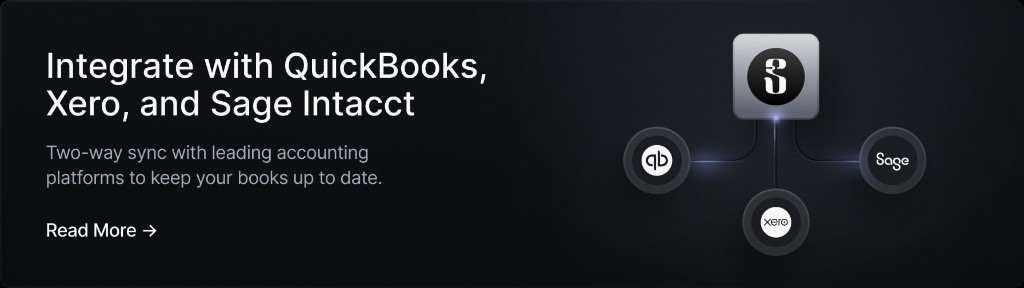
Credit cards issued by institutional banks typically offer more traditional, less flexible expense-management tools. Charge cards, particularly those built by modern financial platforms, can deliver more advanced, software-driven controls. Slash, for example, integrates its charge card directly into its business banking dashboard, enabling real-time transaction monitoring, customizable spending limits, category restrictions, advanced business card spend controls, and scalable virtual business card issuance. All transaction data flows into Slash's analytics and can be exported seamlessly into accounting systems like QuickBooks and Sage Intacct for faster reconciliation.
Should I Get a Charge Card or a Credit Card?
The best choice comes down to how your business spends money, manages cash flow, and wants to control risk. A VC-backed startup, a small business, and a large corporation all have different priorities that ultimately determine which type of card is right for them.
Because no single answer fits every business, it's more useful to evaluate a few concrete scenarios. The examples below highlight when a charge card makes more sense, when a credit card may be the better fit, and how each option aligns with different financial workflows. Use them as a guide to understand which structure supports your specific needs and growth stage:
1. You're the new owner of your first business, but you don't have an established credit score
Most credit card providers rely heavily on your credit score and payment history during the application process. Without either, you're generally limited to secured credit cards, which is a low-limit starter product that requires a cash deposit to open the card account. With Slash, you won't undergo a credit check, and you can still access up to 2% cash back from day one. You also get access to Slash's financial dashboard, which helps you manage spending, transfers, working capital financing, and other core functions as your business grows.⁵
Our pick: A charge card
2. You're a member of the finance team at a large company, and you're looking for ways to better manage employee spending
Many credit cards issued by legacy banks lack the modern spend management capabilities that would benefit a finance team. A charge card from a more modern provider like Slash gives teams the ability to issue unlimited virtual business cards, set team-specific rules, apply custom limits, and add category restrictions all from a centralized dashboard. The platform's analytics page consolidates card activity to generate real-time insights about cash flow and spending. By comparison, legacy apps from providers like Amex and Chase don’t offer as much visibility.
Our pick: A charge card
3. You're a small business owner that needs more cash flow flexibility
If you have strong credit and a small team, a traditional credit card may offer the month-to-month repayment flexibility you need. Tools like balance transfers can help you consolidate existing debt onto a card with a promotional 0% APR period, giving you time to pay down balances without accruing interest. Slash still provides accessible credit and valuable rewards, but if your primary goal is to smooth out cash flow over longer periods, a credit card may be the better match.
Our pick: A credit card
4. You're a startup founder with significant VC backing, and you need to make large up-front purchases
Startup spending tends to be front-loaded: furnishing an office, onboarding new hires, purchasing equipment, issuing employee cards, and more. A charge card with no preset spending limit offers the flexibility needed to make large purchases quickly, especially when supported by strong cash reserves or venture funding. With Slash, spending capacity adjusts based on your company's financial profile, and configurable limits help you manage employee usage without slowing down growth.
Our pick: A charge card
5. You want a stronger rewards program than your current business credit card
Some business credit cards rely on points systems that don't align with your actual spending patterns, and low redemption rates can make rewards feel negligible. While many credit cards offer compelling rewards, two of the most valuable rewards programs available to businesses today are both affiliated with charge cards.
Amex's premium cards deliver strong statement credits and travel perks, such as competitive booking rates with Membership Rewards points and access to their global airport lounge network. Slash takes a more straightforward approach with up to 2% cash back on eligible business purchases, offering an industry-leading rate without complex multipliers.
Our pick: A charge card
Slash: A Smarter Alternative to Traditional Credit Cards
The Slash Visa® Platinum Card is designed for businesses that need substantial spending power and real-time control. Instead of rigid credit limits, long approval timelines, or personal guarantees, Slash adapts your spending capacity to your company's financial profile. This gives you the freedom to scale purchases quickly while building a little extra liquidity with up to 2% cash back.
The real value of Slash extends well beyond the card itself. Slash brings your financial operations into one connected platform, making it easier to move money, manage liquidity, and keep your accounting clean. In addition to the charge card, Slash offers a suite of tools that help streamline how businesses operate every day:
- AI-powered finance: Twin, Slash's built-in AI assistant, can run complex financial analysis from a prompt or handle tasks like issuing cards in bulk and flagging actions that need your attention. It operates inside the permissions and approval rules your team already set.
- Integrated treasury: Earn up to 3.83% annualized yield on idle cash through money market funds from BlackRock and Morgan Stanley, managed directly inside your Slash account rather than at a separate custodian.⁶
- Accounting & ERP integrations: Sync transaction data with QuickBooks Online, Xero, NetSuite, or Sage Intacct to streamline reconciliation, reporting, and month-end close.
- Native cryptocurrency support: Send and receive USD-pegged stablecoins USDC and USDT across eight supported blockchains for faster, lower-cost global payments.⁴
- Diverse payment rails: Slash supports a wide range of payment methods, including card spend, global ACH, international wire transfers to over 180 countries via SWIFT, and real-time domestic payments through RTP and FedNow.
Apply in less than 10 minutes today
Join the 10,000+ businesses already using Slash.
Frequently Asked Questions
Can I use a credit card for large recurring business expenses?
Yes. Many businesses use credit cards for recurring expenses, but your available credit limit and utilization ratio will dictate how effective this is. If you need more insight into your recurring expenses and you want an extra level of control, a charge card like the Slash Card may offer a better fit.
How to Create a Company Credit Card Policy (With Template)

How do you set up a virtual credit card?
Most issuers allow virtual card creation in their dashboards. In Slash, you can issue unlimited virtual business cards by selecting "Add" in the cards dashboard, then you can assign spend rules, limits, or team groupings as needed.
Are Slash corporate cards secure?
Slash follows strict security and compliance standards, including PCI DSS, KYC, AML, and SOC 2 Type II. Virtual cards also use tokenization to help reduce exposure to fraud and skimming at the point of sale.
KYC Compliance for Businesses: Requirements Explained

Which cards have annual fees?
Both credit cards and charge cards often come with annual fees, regardless of their repayment structure. Many cards, especially those offered by American Express and Capital One, come with $300+ in annual fees. The Slash Card, on the other hand, doesn't come with any. That said, you may opt for Slash's $25/mo Pro Plan if you're interested in waiving certain transfer fees.
The 8 Best Free Business Bank Accounts in 2026

Read more from us


