

Top 6 Business Bank Accounts for Affiliate Marketers and Media Buyers in 2026
Programmatic advertising grew 20.5% to $162.4 billion in 2025, adding $27.6 billion in new spend in a single year, according to the IAB and PwC Internet Advertising Revenue Report published in April 2026. Slash runs a business banking platform built for exactly that spend profile, serving more than 10,000 businesses with unlimited virtual cards and up to 2% cashback.¹
That $27.6 billion has to clear a bank account before it clears an ad platform. For an affiliate marketer or media buyer, the account isn't a place to park money. It's the thing standing between a campaign that scales and one that stalls on a Thursday because a card hit a ceiling.
Most business banking reviews rank accounts on monthly fee and APY. Neither variable matters much when 70% of your P&L is media spend. Here are the six accounts worth evaluating, ranked on the criteria that actually decide the outcome.
Key Takeaways
- Slash pays up to 2% cashback (up to 1.5% on the Free plan, up to 2% on Pro) with unlimited virtual cards on both plans and physical cards for any team member.
- Media buyers should rank accounts on cashback, card headroom, and payout speed, not APY.
- FDIC coverage stops at $250,000 per bank, so sweep networks decide real deposit safety.²
- Affiliate network payouts arrive by ACH, which now carries most US noncash payment value.
- The right business bank account for affiliate marketers is a cash-flow decision, not a storage decision.
How to Evaluate a Business Bank Account When Media Spend Is Your Biggest Line Item
The standard criteria are close to useless for this vertical. Branch access is irrelevant, minimum balances rarely bind, and monthly fees are a rounding error against six-figure ad budgets.
Six things actually decide it.
- Cashback rate on card spend: At $200,000 a month across Meta and Google, 1.5% versus 2% is $12,000 a year.
- Card issuance headroom: One card per traffic source, offer, and ad account keeps attribution clean and lets you kill a single source without collateral damage.
- Payout ingestion: Whether network and processor payouts land directly or route through a third platform first.
- Speed of inbound settlement: The gap between money out and money in is the constraint on how fast you scale.
- Deposit protection above the FDIC limit: The standard insurance amount is $250,000 per depositor, per insured bank, per ownership category.
- Entity eligibility: A large share of high-performing media buyers operate non-US entities, and several providers disqualify them outright.
Let's start with the account that scores across all six.
1. Slash: Best Overall for High-Volume Media Buyers
Slash is a financial technology company built for online businesses that move large volumes through cards, with banking services provided by partner bank Column N.A.. The company raised a $100M Series C at a $1.4 billion valuation, and now serves more than 10,000 businesses.
The business banking platform for affiliate marketers is why it leads. Slash customers have earned $50.3 million in cashback to date, and the platform assumes your card spend dwarfs your headcount cost rather than the reverse.
What Slash Does for Ad Spend
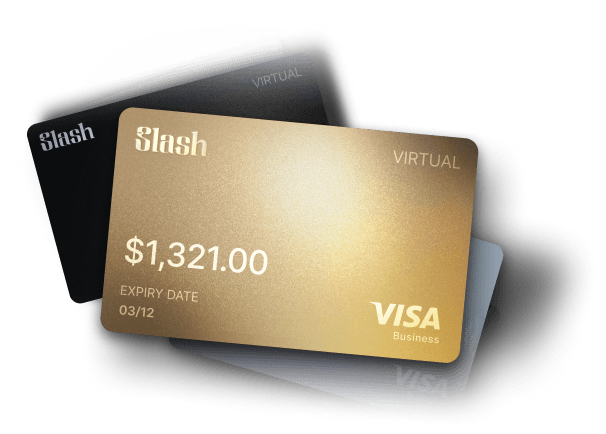
- The Slash Visa® Platinum Card earns up to 2% cashback, with unlimited virtual cards on both plans and physical cards available for any team member.
- Granular card controls, including spend limits, rules, and card groups for department-level budgets, such as $500K a month for ads.
- Direct payout collection from ClickBank, Digistore24, and Cartpanda.
- FDIC coverage up to $150 million through Column N.A.'s insured cash sweep network.²
- Real-time transfers on RTP and FedNow, processed 24/7 including weekends and holidays.
- Automatic receipt capture: when a purchase needs a receipt, Twin, Slash's AI financial assistant, texts the cardholder for a photo and matches it to the transaction.
- Two-way accounting sync with QuickBooks Online, Xero, NetSuite, and Sage Intacct, so ad spend lands in the ledger already categorized.
Jay-Jay P. at Hike Footwear, a Slash customer, described the rewards as "even better than Amex in our case" when explaining how the team handles ad spend.
Pricing
The Free plan costs $0 a month and includes unlimited virtual cards, up to 1.5% cashback, and the full FDIC sweep. Domestic wires are $6, same-day ACH is $1, and outgoing FedNow or RTP is $5.
Pro is $25 a month, raises cashback to up to 2%, and takes domestic wires, same-day ACH, and FedNow or RTP to $0. Above four wires a month it pays for itself, and both Slash plans are published rather than quoted.
One structural point to plan around: the Slash Card is a charge card, not a revolving credit card. Card charges settle in full from your Slash cash account daily, which means no interest, no carried balance, and no month-end surprise. It rewards operators who already run tight cash management, which describes most media buyers at scale.
2. Mercury: A Fit for Venture-Backed Affiliate Operations
Mercury is a familiar name in startup banking. Free checking and savings with no minimums, no monthly fees, and no fees on USD wires is a solid baseline package.
Mercury is a fintech company rather than a bank, with banking services through Choice Financial Group and Column N.A. Deposits are eligible for up to $5 million in FDIC coverage via partner bank sweep networks.
Its IO card, issued by Patriot Bank, earns a flat 1.5% cashback with no personal guarantee and no credit check. The structural catch for media buyers is that the IO limit is tethered to the cash you hold with Mercury and refreshes daily, adjusting downward after large withdrawals.
That's prudent underwriting. It's also the opposite of what you want the week a campaign starts working.
3. Relay: A Fit for Cash Allocation Across Offers
Relay turns one login into up to 20 real checking accounts, each with its own routing and account number. For operators splitting revenue across tax, owner pay, and per-offer media budgets, that structure is useful.
Banking runs through Thread Bank with FDIC sweep coverage up to $3 million. Per NerdWallet's Relay review, Starter is $0 a month, Grow is $30, and Scale runs $90 to $120.
Here's the problem. Relay caps issuance at 50 debit cards, per its own product page, and debit cards earn no cashback. A buyer running one card per offer across five networks hits that ceiling inside a quarter and gets nothing back on the spend along the way.
Relay is a reasonable cash-organization layer. It isn't a spend engine, and it works best alongside a cashback card rather than instead of one.
4. Airwallex: A Fit for Multi-Region Ad Spend
If you're buying media across several countries and billing in several currencies, Airwallex is a viable option. Global Accounts give local details in 20+ currencies, local transfers are free to 120+ countries, and corporate cards come built in.
FX runs around 0.5% above interbank on major currencies and roughly 1% on the rest, which is lower than typical bank spreads. Plans are tiered from a free or low-cost entry level up to enterprise.
Two things to verify before committing. Pricing is regionalized, so the rate card you found may not be the one that applies to your entity, and SWIFT transfers are priced per transaction rather than bundled.
An inbound receiving fee of around 0.3% has also been reported on some account types that isn't listed on the public pricing page. Confirm that directly for your entity before you model the cost.
5. Wise Business: A Fit for Low-Cost Currency Conversion
Wise isn't a bank account and doesn't claim to be. What it offers is a way to hold 40-plus currencies with local account details in more than 20 of them, including a US routing and account number.
FX starts from roughly 0.57% with no markup on the mid-market rate. Batch payments handle up to 1,000 recipients per run, which matters if you're paying a roster of affiliates or creators monthly.
The cost hides in the receiving line. Wise charges a fixed 6.11 USD per inbound USD wire or SWIFT payment, while inbound USD ACH is free, and a one-time setup fee unlocks account details.
At ten inbound wires a month that's roughly $61 before any conversion. Model it against how your networks actually pay you.
6. Payoneer: A Fit for Network and Marketplace Payout Collection
Payoneer is built around platform payouts. If your networks and marketplaces already support Payoneer payouts, the integration reduces some operational friction on the collection side.
Local receiving accounts cover USD, EUR, GBP, and other currencies, and Payoneer supports sending to 190+ countries.
The fee structure is where operators get caught. Receiving via US ACH bank debit runs 1%, client card payments run up to 3.99% plus $0.49, and same-currency withdrawals under $50,000 a month carry a $1.50 flat fee, per Slash's breakdown of Payoneer fees.
An annual fee of $29.95 applies if the account receives less than 6,000 USD or equivalent in any 12 consecutive months, per Payoneer's pricing page last updated 1 January 2026. On $50,000 a month in ACH collections, the 1% receiving fee alone is $6,000 a year.
Side-by-Side Comparison
Provider figures reflect publicly published information as of September 2026 and are subject to change.
How to Choose Based on Your Monthly Spend
Work backwards from card volume, not bank balance.
- Under $25,000 a month: Cashback isn't yet decisive. Optimize for free wires and clean bookkeeping.
- $25,000 to $250,000 a month: Cashback becomes your second-biggest margin lever after media efficiency, and a half-point gap is real money.
- Above $250,000 a month: Card headroom, spend controls, and deposit protection above $250,000 matter as much as the rate itself.
- Buying across multiple regions: Start with FX cost and local account coverage, then look at cards.
- Running a non-US entity: Start with eligibility, because most of this list will disqualify you before pricing is even relevant.
At the upper end, pair the account with corporate cards carrying granular spend controls rather than treating cards as an afterthought.
How Slash Supports Affiliate Marketers and Media Buyers
The binding constraint in this business is the gap between the day you pay the ad platform and the day the network pays you. Media spend leaves daily. Payouts arrive on net-15 or net-30, largely over ACH, which reached almost three quarters of US noncash payment value for the first time in 2024 according to the Federal Reserve's 2025 payments study.
Most of the accounts above solve one side of that gap. Slash is built to cover both sides from a single dashboard, so cards, banking, payouts, and financing don't live on separate platforms with separate logins. Slash also comes with:
- Multi-rail payments:Domestic and international ACH, SWIFT wires to 180+ countries, and near-instant domestic transfers over RTP and FedNow. Pro plan users send same-day ACH, domestic wires, and FedNow/RTP payments for $0.
- Stablecoin payments:Send and receive USDC and USDT across 15 supported blockchain networks for faster, lower-cost international settlement with affiliates and vendors.⁴
- Working capital financing:Approved users can draw short-term financing directly from the dashboard with 30-, 60-, or 90-day repayment terms to bridge the gap between ad spend and network payouts.⁵
- A high-yield treasury account: Park reserves in a high-yield treasury account backed by money market funds from Morgan Stanley and BlackRock, with no minimum balance and no yield tiering by plan.⁶
- Accounting automations: Card transactions, receipts, and invoices sync two-way with QuickBooks Online, Xero, NetSuite, and Sage Intacct, with AI-based categorization and coding applied before the entry hits your ledger.
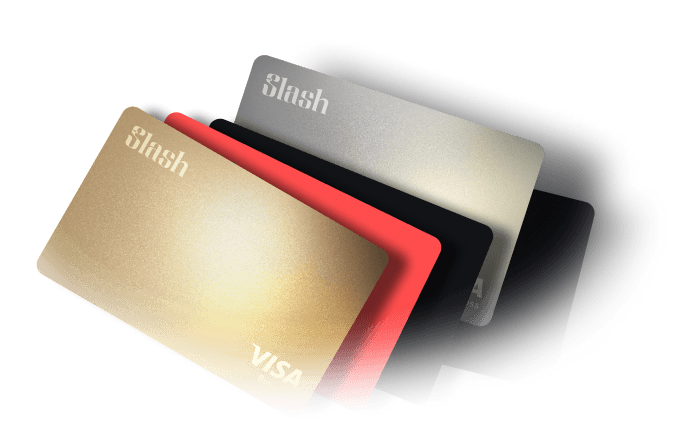
Every one of those features runs off the same Slash Visa® Platinum Card and business banking platform. That's the difference between an account that stores media-spend cash and one that puts it to work.
Conclusion
With programmatic spend alone adding $27.6 billion in a single year, the gap between a 1.5% and a 2% card compounds faster every quarter it goes unaddressed. Pick on cashback, card headroom, and how quickly payouts settle, then confirm deposit protection above $250,000.
The operators who scale fastest in 2026 will be the ones who stopped treating the bank account as storage and started treating it as part of the campaign infrastructure.
Talk to the Slash team about structuring cards and virtual accounts around your traffic sources before your next scaling window.
Apply in less than 10 minutes today
Join the 10,000+ businesses already using Slash.
FAQs
1. What is the best business bank account for affiliate marketers in 2026?
The best business bank account for affiliate marketers in 2026 is Slash, based on up to 2% cashback, unlimited virtual cards on both plans, and direct payout collection from ClickBank, Digistore24, and Cartpanda. Mercury suits venture-backed operations that value free wires over rewards, and Payoneer suits businesses collecting mainly through network integrations.
The 8 Best Free Business Bank Accounts in 2026

2. What should media buyers look for in a business bank account?
Media buyers should look for cashback rate on card spend, unlimited virtual card issuance, fast inbound settlement, and FDIC coverage above the $250,000 standard limit. Monthly fees and savings APY matter far less when media spend dominates the cost structure.
Opening a Company Bank Account: How to Pick Your Provider

3. Can affiliate marketers open a business bank account without a US company?
Affiliate marketers can access USD payment infrastructure without a US company through the Slash Global USD Account, available to businesses in 130+ countries with ACH, wire, and USDC stablecoin support, plus a US account and routing number. The Global USD Account is a digital-asset product and is not a bank deposit.
4. How many virtual cards does a media buying operation need?
A media buying operation typically needs one virtual card per traffic source, offer, and ad account, which means dozens to hundreds of cards at scale. Slash issues unlimited virtual cards on both plans, plus physical cards for any team member, while Relay caps issuance at 50 debit cards.
Open a US Business Bank Account as a Non-Resident: Requirements and Benefits

5. Are Slash business accounts FDIC insured?
Slash business checking accounts are FDIC insured through partner bank Column N.A., with coverage up to $150 million via Column N.A.'s insured cash sweep network. FDIC insurance protects against the failure of an insured depository institution, not against other losses.
FDIC Insurance Guide: Limits, Protection Strategies, and How to Elevate Your Coverage

What is a Sweep Network and How Does it Work?


