

How Can a Business Start Accepting Cryptocurrency as Payment?
Crypto payments and exchanges are rapidly becoming commonplace in global markets and for a variety of industries, not just tech companies. From e-commerce brands to agencies operating globally, businesses are adopting crypto payments as a practical transaction and payment method.
Global reach, fast settlement, access to decentralized blockchain networks, and a reputation as a cutting-edge player are reasons why companies are integrating blockchain into their operations. But if you’re just starting out with crypto, it can be a taxing uphill climb before you’re able to make your first crypto payment.
In this guide, we’ll walk you through what crypto payments are, why it matter for your business, how to go about making your first payment, and how financial tools like Slash can help you in the process.


Crypto payments for businesses: Key concepts explained:
- Blockchain: A decentralized digital ledger that records transactions across a network of computers. In crypto payments, it ensures that transactions are transparent, secure, and cannot be altered once confirmed.
- Stablecoins: A type of cryptocurrency designed to maintain a stable value, usually by being pegged to a fiat currency like the US dollar. Businesses often use stablecoins to avoid the price volatility associated with other cryptocurrencies.
- Fiat currency: Government-issued money that is not backed by a physical commodity, such as the US dollar or euro. Fiat is the traditional form of money that crypto payments are often converted into or compared against.
- Wallets: Digital tools that store and manage cryptocurrency, allowing users to send, receive, and hold funds. Wallets can be software-based (online or mobile apps) or hardware devices for added security.
- Cryptocurrency payment gateway: A service that enables businesses to accept crypto payments by handling transaction processing, currency conversion, and integration with existing checkout or billing systems.
What does it mean to accept crypto payments?
Accepting crypto payments means that your business allows customers, vendors, and partners to pay you with cryptocurrency. Cryptocurrency is a digital asset that can be exchanged, paid, and stored on a blockchain rather than in a bank network or card system. This essentially means that your payments are decentralized, run, maintained, and protected by blockchain algorithms.
The blockchain’s decentralized nature and global reach give it capabilities beyond traditional banking, meaning that accepting crypto payments can take place at any time and day and aren’t subject to bank hours, higher fees, and holiday breaks. However, cryptocurrencies are often volatile; payments you make at one time of day can reflect a different value than payments made at a later hour.
Stablecoins like USDC and USDT are pegged to USD. For accepting payments with crypto, this means more straightforward unification with fiat systems, letting your business accept USD-pegged stablecoins for predictable pricing with lower transaction fees and faster settlement benefits of crypto.
Why businesses are adopting crypto payments
If you’re new to the space, you may be wondering why so many businesses are making the switch to crypto. There are a number of key reasons why crypto is becoming a more widely accepted payment method, including:
Access to a global customer base
Unlike traditional banking systems that are oftentimes geographically and politically based, blockchain and crypto rails are borderless by design. This has a number of advantages for business, including faster global transactions while spending less on FX and transfer fees. With easier global access on the payment and processing side, this means your customer base can be more global, so you can attract higher scale and more diverse customers, industries, and partnerships.
Faster cross-border payments
Traditional cross-border payments must contend with high FX or foreign exchange fees, bank processing time, and work-hour or holiday delays. With such global reach, this sort of lag can be extremely costly for businesses. Slash natively supports sending and receiving USDC and USDT, allowing companies to settle cross-border transactions in a matter of minutes.⁴
Lower transaction fees compared to traditional rails
Banks typically impose high fees on exchanges and transfers. Depending on the form of transfer, like international high-speed wires, this can get costly. If you’re a business that moves money frequently, needs to pay vendors on time, or operates globally, this means traditional banking isn’t keeping up. Slash's stablecoin transfers typically have transaction fees of less than 1%, making them much more cost-effective than traditional banking rails.
New revenue streams
Ultimately, offering crypto payments gives customers and partners another way to pay you. This lowers any restrictions and creates a new revenue stream for your business to gain revenue and continue to scale. Plus, implementing crypto payment processing can contribute to an enhanced brand image, potentially bringing in new customers. The global reach of crypto can also help you attract customers and partnerships with broader audiences.
Key considerations before accepting crypto
Crypto has a lot to offer your business, but it’s not a perfect system. Considering all aspects of crypto before you accept payments will help you ensure it’s the right fit for your business, give you more clarity on the process itself, and set you up for successful future transactions. Here are some things to keep in mind:
Volatility and the risk of price swings
Cryptocurrencies like Bitcoin and Ethereum are historically and infamously quite volatile. This means their price regularly and sometimes drastically fluctuates. This can be a huge concern for most businesses needing stable pricing and reliable payment inflow. Utilizing stablecoins can eliminate issues regarding volatility, while giving you the same benefits of faster settlement and low fees on the blockchain.
Tax and accounting compliance
Crypto accounting isn’t wholly unlike traditional accounting; it involves maintaining and recording transaction and payment histories, financial statements, exchanges, loans, and more comprehensive aspects of your accounting ledger. However, crypto can become complicated with multiple wallets and payment platforms. Additionally, new regulations and changes in crypto laws can change tax filing requirements. Ensuring you or your accountant is up-to-date on crypto accounting is necessary.
Security best practices and fraud
There are a number of crypto wallets, exchanges, and payment platforms for authorizing and accepting crypto payments. However, these third-party sites can introduce you to risks of fraud or phishing. Making sure to use trusted and supported tools will limit the risks involved in crypto payments. Using Slash lets you access permissions, approvals, and logs in one secure dashboard.
Choosing the right payment processor or partner
Payment processors are sites where crypto payments can be made. There are many out there that can differentiate by what cryptos they support, on/off ramp features, and expense tracking. The best payment processor for your business should support the sort of transactions you intend to make while making it as straightforward as possible. Slash makes receiving, conversions, payouts, and reconciliation accessible on one dashboard with access to USDC and USDT.
Understanding customer demand in your industry
The types of cryptocurrencies your customers prefer can vary depending on your industry. Instead of committing to a single option, it helps to stay flexible. Tools like Slash let you enable or disable stablecoin acceptance without changing your invoicing or checkout setup. This makes it easier to test crypto payments with your customers and see what works, without adding unnecessary operational complexity.
Slash business banking
Works with cards, crypto, plus cards, crypto, accounting, and more.

Compliance, Taxes, and Regulations
Crypto compliance is not static. Rules change frequently, they vary by country, and in the United States they can differ at both the federal and state level. What may be permitted, restricted, taxable, or licensed in one jurisdiction may be treated differently in another. It’s also important to review your platform or provider’s supported jurisdictions and user agreements.
Let’s take a look at some compliance areas businesses should evaluate:
- Regulatory Status: Confirm whether your intended crypto activity is permitted and whether it triggers regulatory obligations. Is accepting or holding cryptocurrency regulated where you operate, and are there location-specific rules that apply? For example, simply accepting crypto as payment may raise different issues than holding customer assets, facilitating transfers, or operating treasury strategies involving digital assets.
- KYC and AML: Know Your Customer (KYC) and Anti-Money Laundering (AML) obligations can matter even for businesses that are not financial institutions. Your business model may require procedures for customer identity verification, sanctions screening, transaction monitoring, and more.
- Taxes: In the U.S., crypto is generally treated as property for federal tax purposes, which can create tax consequences beyond what businesses expect. Documentation is especially important, because reporting often depends on accurate basis, valuation, and transaction records. Overall, businesses should evaluate factors like recordkeeping requirements and the rules surrounding selling and spending crypto.
- Customer Transparency: If customers interact with crypto payments, disclosures matter. Businesses should be clear about crypto fees/network costs, settlement timing, volatility risks, and refund policies. Transparency can help reduce disputes and support both compliance and customer trust.
- Data and Security: It’s important for businesses to establish security controls around wallet custody and private key management. If providers store or process customer information, review their security practices, breach procedures, and data handling commitments in their agreements. For many businesses, vendor security due diligence is as important as regulatory due diligence.
Common ways to accept crypto payments
As crypto continues to expand, it’s good to know that there are many pathways for sending payments:
Using a crypto payments gateway
Popular crypto payment platforms, such as BitPay, Coinbase, and PayPal, support crypto payments, often alongside other financial management plugins and tools. Many customers may already be familiar with these platforms, saving you a potentially expensive and lengthy operational step.
Accepting direct wallet-to-wallet transfers
Direct transfers between crypto wallets function similarly to transfers between bank accounts, but without the bank intermediary. Customers, vendors, and partners can send crypto payments directly using your wallet address. This process is fast and often involves no to low fees.
Integrating crypto payments into e-commerce platforms
Plugins, apps, and APIs can let you integrate crypto payment platforms into your e-commerce platform. An example is Shopify’s integration with BitPay, a fairly streamlined way to set up and accept payments on one site. Another example is WooCommerce.
Using third-party merchant services with auto-conversion to fiat
PayPal, Stripe, and Clover are examples of third-party merchant services that your business can use in its payment process. These may be familiar to customers and make it easier for them to make payments, but they may incur more fees with additional third-party features.
How to accept crypto payments as a business with Slash
Slash is designed to make it easy for businesses to manage finances at scale. A key part of that is a crypto payment system that’s simple to set up and reliable to use. Here’s how accepting crypto payments with Slash works:
Step 1: Open a Slash account and verify your business
Navigate to slash.com/register to get started. You’ll need to provide basic business information, including your EIN and company documents, so Slash can verify your business.
Step 2: Enable stablecoin payments
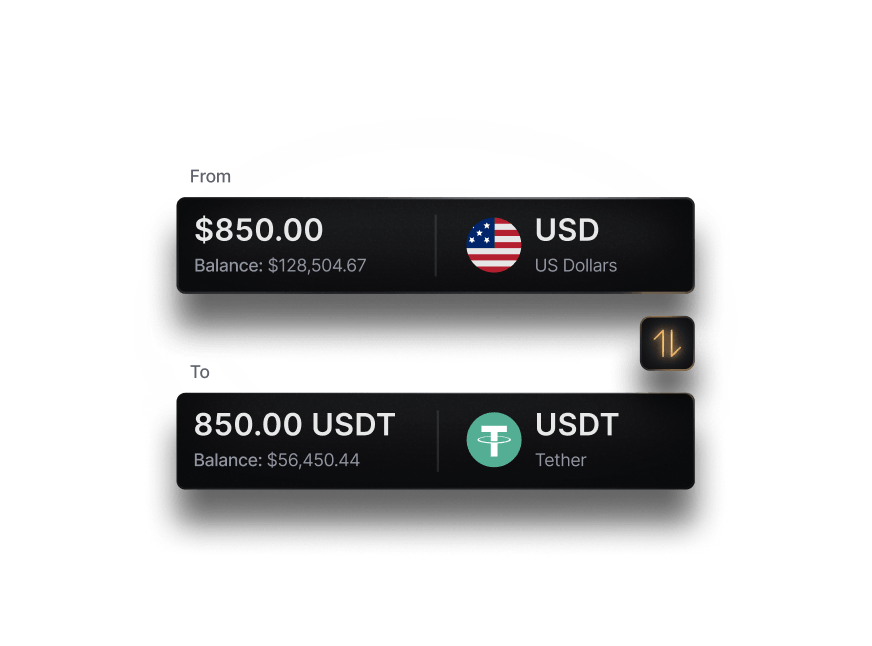
Once your account is set up, you'll need to apply separately for Slash Crypto. This gives you the ability to send and receive payments in widely used stablecoins like USDT and USDC.
Step 3: Set auto-settlement preferences
Customize how incoming payments are handled. You can choose to hold stablecoins or automatically convert them to fiat, depending on your cash flow preferences.
Step 4: Share payment details with customers
Slash makes it easy to offer crypto as a payment option on your invoices. You can include stablecoin payment details directly on the invoice, so customers can pay you in crypto without needing a separate checkout flow. Slash also provides wallet details for supported assets, along with auto-generated QR codes tied to the correct wallet address. This makes it easier for customers to send payment accurately and reduces friction at the point of payment.
Step 5: Receive and use your funds
From your Slash account, you can hold balances, pay vendors via fiat-paths or stablecoin, manage approvals, and access detailed financial information, management tools, and integrated accounting software all in one place.
Step 6: Reconcile and scale
Once payments come in, you can hold balances, pay vendors using fiat or stablecoins, manage approvals, and track activity from a single dashboard. Slash also provides built-in financial tools and accounting integrations to keep everything organized.
Apply in less than 10 minutes today
Join the 10,000+ businesses already using Slash.
Frequently Asked Questions
Are businesses taxed on crypto?
Yes. In most jurisdictions, including the US, crypto is treated as property for tax purposes. This means businesses may owe taxes when receiving, selling, or converting crypto, and should track both the value at receipt and any gains or losses over time.
Crypto Tax Guide for Businesses: Reporting, Calculating, Complying

Can I accept crypto as payment?
Yes, businesses in many countries, including the US, can legally accept crypto as payment. However, you are still responsible for complying with local regulations, including reporting requirements and tax obligations, which may vary by jurisdiction.
Crypto Payment Processors: Compare Top Platforms for Businesses

What are the differences between USDC and USDT?
USDC and USDT are both stablecoins designed to maintain a 1:1 value with the US dollar, but they differ in how they are issued and managed. USDC is issued by Circle and is generally known for more transparent reserve reporting, while USDT is issued by Tether and has broader adoption and liquidity across global markets.
USDC vs. USDT: Choosing the Right Stablecoin
Read more from us


