

Ecommerce Payment Processing: How It Works & Best Practices
The first thing that comes to mind when you think of “payment processing” might be the terminal you tap your credit card at when you’re buying your morning coffee. Payment processing for ecommerce, however, is a different ballgame. If you run an online storefront or SaaS company, your processor needs to be able to accept card payments, ACH transfers, and a host of other payment methods while keeping each transaction secure.
The exact provider you choose can influence processing costs, settlement speed, fraud exposure, and how consistently your sales match your accounting records. We wrote this guide to break down how ecommerce payment processing works, the different payment methods stores can offer, and the features you should compare when choosing a gateway. We also cover how Slash connects card processing and a customizable checkout with the financial tools ecommerce teams need to use outside of the context of a purchase.¹ With processing, accounting automations, virtual accounts, and more, Slash’s all-in-one dashboard can help businesses from the moment an item is bought to the moment it’s reconciled at the end of the month.
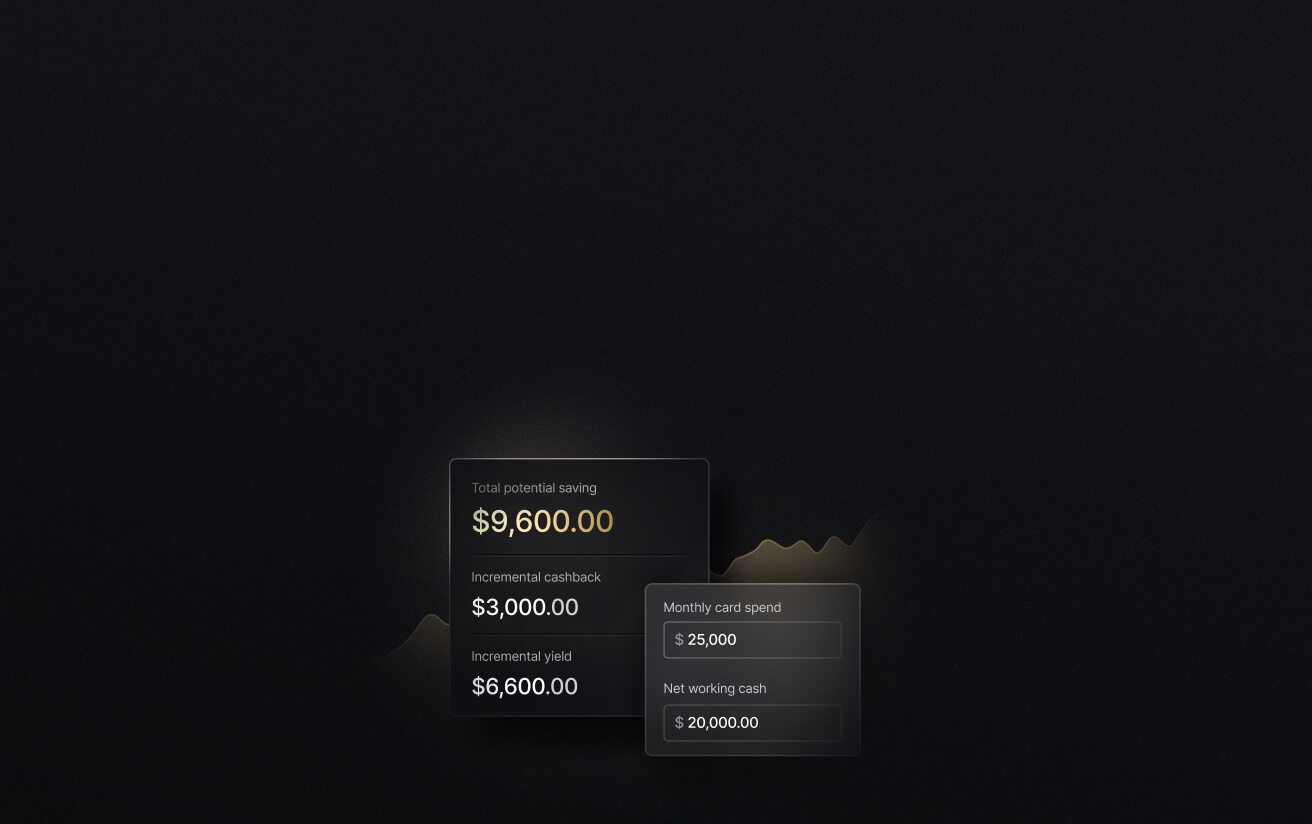
See the ROI behind your spend
Use this calculator to understand impact, then manage and track it all in Slash.

Key Takeaways
- Card-not-present transactions usually cost more because the fraud risk is higher. Card-present rates are typically between 1.5% and 2.5%, compared to 2% to 3.5% online.
- Funds don’t actually arrive in your account until capture and settlement complete, which usually comes 1-3 business days later.
- You shouldn’t fulfill an order off a browser-side success message, because the payment has to be matched to the order server-side using an internal identifier first.
- Your ecommerce company may have to accept up to five different types of payment methods, while in-person terminals usually handle two or three.
- International sellers have a lot more factors to consider than purely domestic sellers, since currency acceptance and global reach can vary widely.
What Is Ecommerce Payment Processing?
Ecommerce payment processing is the system that accepts a customer’s online payment information, requests authorization, and transfers approved funds to the merchant. A given transaction may begin on a website, in an app, through an invoice, or on a hosted checkout page. In any case, it doesn’t take place at a physical point-of-sale (POS) system.
With a complete setup, you’ll generally have a gateway, processor, acquiring relationship or merchant account, fraud controls, and payout destination. The payment gateway is the checkout-facing part. It securely collects card or wallet details and sends them into the financial infrastructure. From there, the processor routes the authorization request among the merchant’s acquiring side, the card network, and the customer’s issuing bank, then helps clear and settle approved transactions.
Some providers sell these functions separately, while others bundle the gateway, processing, merchant account, security, and reporting. Slash goes a step further; along with those features, the platform functions as a merchant of record (MoR), meaning it manages most compliance factors while accepting liability for customer transactions on your behalf. However, you still remain responsible for filing and remitting applicable sales taxes.
Ecommerce makes the processing system a bit more complicated because the buyer and card aren’t physically present. The provider should include authentication, fraud screening, and chargeback controls within their checkout without making the experience a pain in the neck for the customer. It also has to connect each payment with the correct order to make sure the store doesn’t fulfill a purchase based only on a browser-side success message.
Common Ecommerce Payment Methods
While a physical payment processor mostly accepts cards and digital wallets, ecommerce processors have to be prepared for a few more methods. These can include:
- Credit and debit cards: The gateway collects or tokenizes the credentials, and the processor routes the transaction through networks such as Visa or Mastercard. Pricing and interchange costs can differ a bit between debit cards and credit cards. Cardholders can also dispute transactions through the chargeback process, which isn’t as easy through other means.
- Digital wallets: Apple Pay, Google Pay, PayPal, and similar wallets let buyers use saved credentials without retyping their card number. Many of these purchases still get processed over card rails, but the wallet supplies its own token or protected credential.
- ACH transfers: With ACH, money moves directly from the customer’s bank account. It tends to be less expensive fee-wise, though it clears more slowly than a card purchase. ACH transfers can suit subscriptions, B2B transactions, and certain expensive orders.
- Buy now, pay later (BNPL): Providers such as Afterpay and Klarna let customers divide a purchase into installments that typically don’t carry interest. The provider makes a separate approval decision and generally pays the merchant upfront, minus its fee, while collecting from the buyer over time.
- Crypto and stablecoins: These payments move over blockchain networks rather than through card or bank rails. A gateway can provide payment instructions, monitor the transfer, and convert it into a local currency if the merchant doesn’t want to hold digital assets. Stablecoins like USDC and USDT are pegged 1:1 to the U.S. dollar, which makes them a lot more practical for routine purchases than a volatile token like Bitcoin.
One of the main differences between ecommerce payments and standard in-person payments is the processing fees. Online payments (called card-not-present in the context of cards) are inherently more vulnerable to fraud, since the user is working with their own system and can’t as easily be monitored. As a result, card-present fees are often between 1.5% and 2.5%, while card-not-present fees tend to range from 2% to 3.5%.
How Ecommerce Payment Processing Works
The exact flow varies by payment method, as a crypto purchase travels through the blockchain and a BNPL purchase occurs in installments. An ordinary card purchase goes through the following four stages:
Step 1: Initiating the Payment
Your customer arrives at the checkout, confirms the order, and selects a payment method. Then, your store creates a transaction that contains the amount, currency, order reference, and other relevant details. However, the order isn’t paid for at this moment – the checkout has only submitted a payment attempt. Your integration can assign an internal identifier so approvals, refunds, disputes, and payouts can be matched to the same order. It should also prevent duplicate charges if a shopper refreshes the page or presses the payment button twice.
The customer experience matters, and the processor you choose can end up making a real difference (whether positive or negative). Excessive fields, forced account creation, unclear costs, or missing payment methods can interrupt the sale. Before picking a payment provider, try to get a sense of how the average purchase through their system works.
Step 2: Secure Transmission
The payment gateway protects and transmits your customer’s information. “Encryption” secures data while it moves, while “tokenization” replaces reusable card details with a limited-purpose identifier. Additionally, hosted fields or prebuilt payment components can send sensitive data directly to the provider rather than through the merchant’s servers.
Your provider may then evaluate the billing address, card security code, device, location, order value, and previous behavior. Some transactions may trigger 3-D Secure or another authentication step from the issuing bank, which typically sends a 6-digit code to the customer’s phone.
Every business that accepts cards is responsible for staying PCI DSS compliant, but your checkout architecture can take some of that weight off your hands. Using securely hosted payment fields can keep you more compliant, while collecting and storing card numbers directly is riskier.
Step 3: Bank Clearance
The processor sends the authorization request to the card network, which routes it to the issuing bank. The issuer checks whether the card is valid, whether sufficient funds or credit are available, and whether the purchase appears suspicious. It then returns an approval or decline through the network, processor, and gateway.
To be clear, approval doesn’t mean the merchant has received the money. It means the issuer has authorized the purchase, allowing the store to confirm the order subject to its own fraud and fulfillment rules.
Most checkouts handle declines by inviting the customer to correct their information or try another method. As referenced in step 1, these attempts should be “idempotent”, which means repeated clicks shouldn’t result in full repeated requests. You should also monitor decline rates by country, device, issuer, and payment method to see if a certain customer sect would have a harder time than others.
Step 4: Settlement
Finally, the merchant captures the payment. Some businesses take it in immediately, while others wait until the order’s ready to ship. The processor submits captured transactions for clearing, and the card network calculates what the issuing and acquiring sides owe.
Funds then move through the network to the acquiring side. Processing fees and adjustments are deducted before the provider pays the net proceeds into the merchant’s account. Standard card payouts often take 1-3 business days, though the exact timing depends on the provider, payment method, account history, and risk reviews.
At the same time, settlement should also update your company’s records. The payment must match the order, processor fee, refund status, and final bank deposit. With a provider like Slash, your payment processor lives in the same system as your live financial dashboard, meaning incoming and outgoing payment data is easy to access and analyze.
How to Choose the Right Payment Gateway
When it comes to shopping for a payment gateway, your customer base may partially make the decision for you. Apart from pricing, a large part of your decision will rest on where your average customer lives and what methods they use. Here’s a breakdown of each of the factors you should consider:
- Security and PCI compliance: The strongest security features include tokenization, hosted/embedded fields, 3-D Secure, fraud monitoring, velocity checks, and clear dispute tools. It’s a good idea to ask which PCI tasks the provider simplifies and which remain with you as the merchant. All in all, your security measures should block suspicious activity without blocking too many legitimate buyers.
- Supported payment methods: This is the part that most strongly depends on your business model and customer base. A domestic consumer store may just need cards and wallets, while a B2B seller may also need ACH and invoices. International stores might need local bank methods, regional wallets, or stablecoins.
- Transaction fees and pricing: You’ll need to evaluate the effective rate rather than just the advertised percentage. Include fixed charges, international card and conversion fees, monthly or gateway costs, dispute fees, refund treatment, instant payout charges, and any separate pricing for fraud or subscription tools. Flat rates are easier to calculate, while interchange plus can potentially save you money at higher volumes.
- Global reach and settlement speed: Review which countries the provider acquires in locally, what currencies customers can use, and which currencies the merchant can settle. Payout timing is also important to ask about; weekend availability, reserve policies, account holds, and procedures for releasing funds during a review can vary, and you’ll rarely see them discussed on a provider’s website.
How Slash Helps Ecommerce Teams With Payment Processing
One of the toughest parts of searching for payment processing solutions for ecommerce is trying to figure out how they fit into your current tech stack. How does a given processor link with your current bank account? Do you need to find a separate gateway product for your checkout page? With Slash, you don’t have to ask these questions at all.
Slash combines card processing, an embedded gateway, and the destination account in a single financial platform. Ecommerce businesses can accept cards within invoices and/or add payments to an existing website with the Slash SDK. Slash is responsible for securely collecting card and supported wallet details, while you as the merchant can control the surrounding design and the data you intake.
Even though Slash functions as a managed merchant of record solution, which usually means processing fees between 4-10%, all payments come with a flat fee of 3% plus 40 cents per transaction.
In short, Slash Payment Processing connects the money coming into your business with the tools you already use to manage it, including your accounts, corporate cards, accounting software, and more. Here’s a look at some other features Slash comes with:
- Business banking: FDIC-insured business checking, protected up to $150M through Column N.A.'s insured cash sweep network.²
- Global USD: The Slash Global USD account is designed as an alternative for foreign founders who want access to USD without forming a US entity.³ Accounts are backed on Base by a balance held in USDC, which is designed to maintain a one-to-one value with the US dollar.
- High-yield treasury: Earn up to 4.01% annualized yield on idle funds with money market investments from BlackRock and Morgan Stanley, managed directly within your Slash account.⁶
- Native cryptocurrency support: Send and receive USD-pegged stablecoins USDC and USDT across 15 supported blockchains for faster, lower-cost global payments.⁴
- Diverse payment rails: Slash supports a wide range of payment methods, including card spend, global ACH, international wire transfers to over 180 countries via SWIFT, and real-time domestic payments through RTP and FedNow.
Apply in less than 10 minutes today
Join the 10,000+ businesses already using Slash.
Frequently Asked Questions
What’s the difference between flat-rate pricing and interchange-plus pricing?
Interchange-plus pricing differs by card type, so a premium rewards card costs more to accept than a basic debit card. That difference then passes straight through to you alongside a disclosed processor markup. Flat-rate pricing has the processor absorb that variation and charge you one blended percentage regardless, which is simpler to forecast, but may mean you’re overpaying on cheap transactions to subsidize expensive ones.
Interchange Fees Explained: What They Are and When They Appear

Should I capture payment when the order is placed or when it ships?
Capturing at order is simpler and suits anything delivered instantly, including digital goods and most subscriptions. Capturing at shipment fits physical products, because reversing an uncaptured authorization is easier than issuing a refund and avoids charging for something you can’t fulfill.
What are some examples of ecommerce payment processors?
Some common examples of ecommerce payment processors are Slash, Stripe, Shopify Payment, PayPal, and Helcim.
What Is Payment Processing? A Guide for Businesses


